Recently, president Cluck chose Grand Island, Nebraska as the location for a rally where he became once again momentarily notorious for saying that he really wouldn’t mind it too much if Iran would bomb Los Angeles and San Diego. It would be worth the loss of those two cities and the people in them just to have kept our country safe. (The irony, of course, is that the biggest threat to this country was standing at the podium at the time)
The videos of his performance at that rally have shown the crowd behind him hooting and hollering and clapping for such a … dunno … psychotic? … statement.
Many of the comments that I’ve seen on those video clips have been very disparaging toward Nebraska and its citizens. Some of those comments have made it pretty obvious that the writer had never been to Nebraska, and probably couldn’t even find it on a map. Making a judgment about the entire population of a state based on the sort of people who would attend a Cluck rally is a hazardous thing to do. MAGA doesn’t think and behave like most other people you might know.
I like Nebraska, and I like the people that I’ve met there. I lived there for two years during my time of service in the United States Air Force, when I was stationed at Offutt AFB in Bellevue NE. Later, when Robin and I were living in Yankton, South Dakota, it was only a short drive across a Missouri River bridge to that fine state.
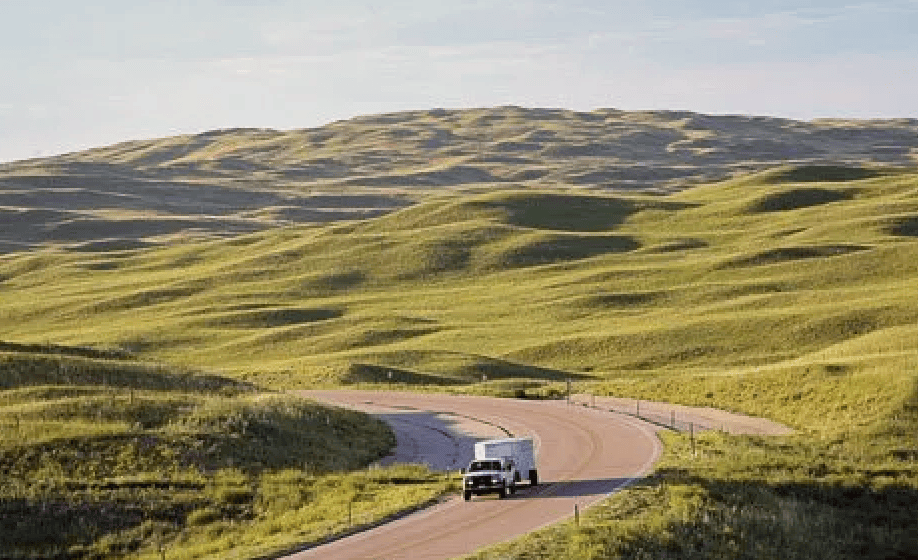
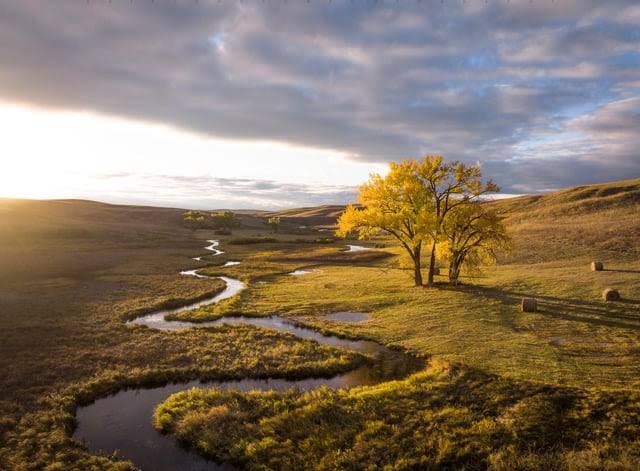
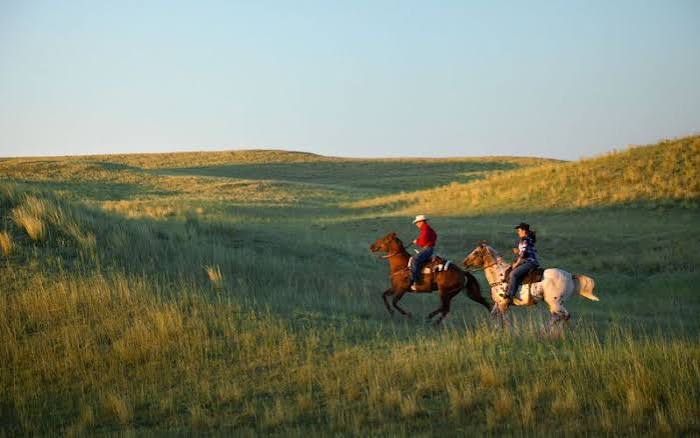
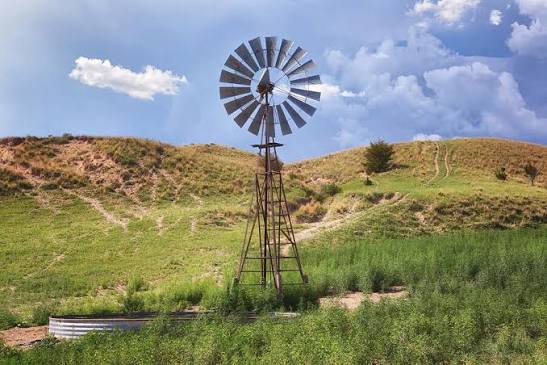
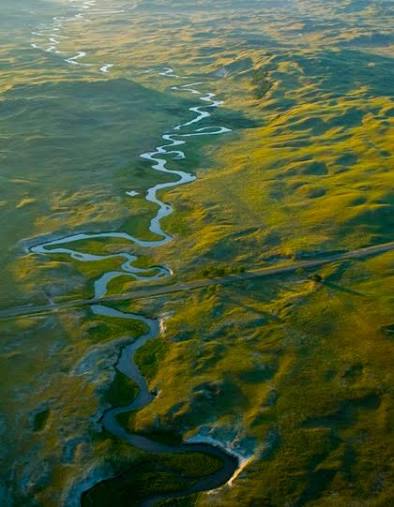
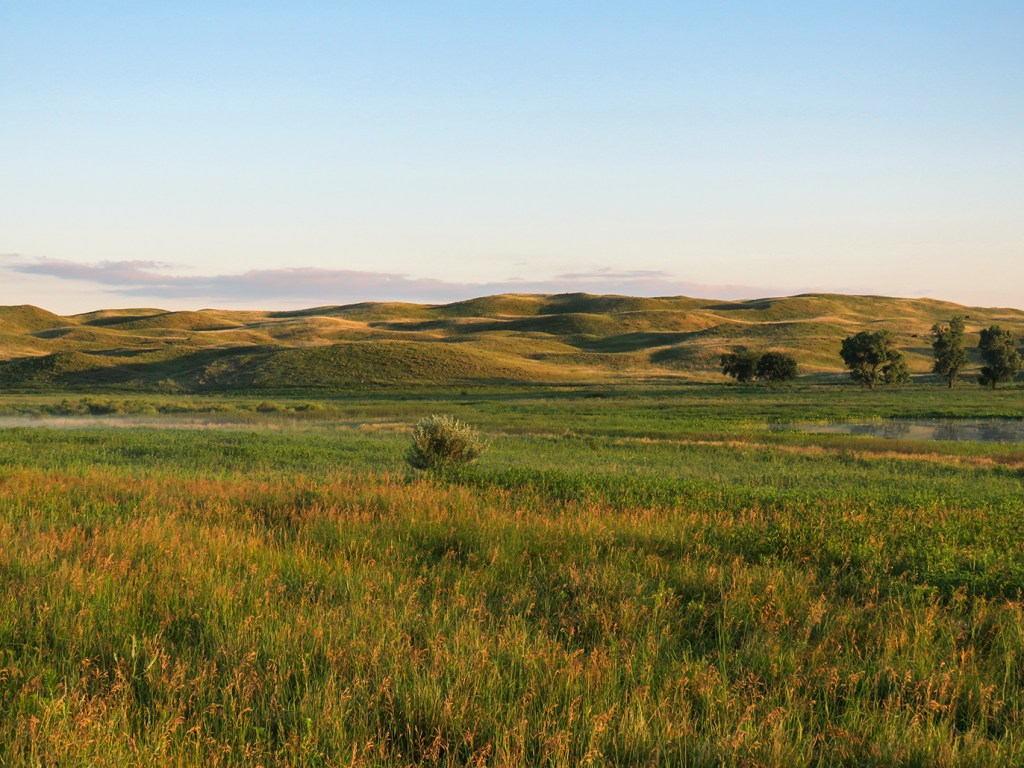
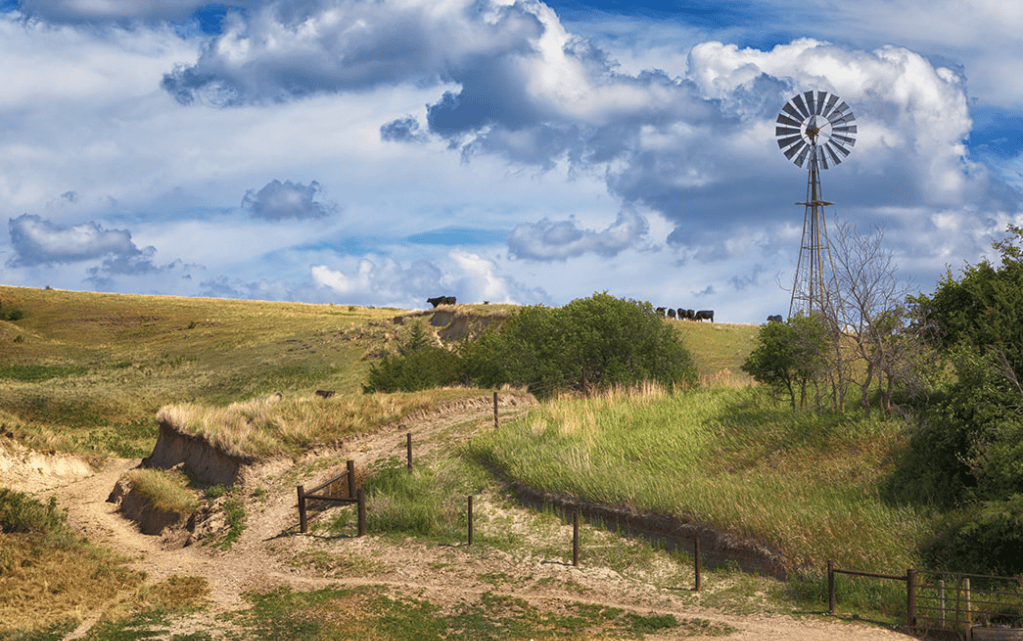
But there’s one part of Nebraska that I have a special affinity for, and that is the western Sandhills. From the first time that I saw them, which was on a motorcycle trip, I have looked forward to every opportunity to go back and revisit them. When you look out at those areas, what you see is an undulating landscape with hills and ridges. Everything is softness. All the gentle curves are soft. Mostly they are grasslands with the occasional tree here and there. If you take a shovel and dig down through the sod, you find only sand. This is because they are essentially a huge area of dunes covering 20,000 square miles that became completely covered and stabilized by grass.
(The next two paragraphs are information found for me by one of my new best friends, Chad GPT. I edited and reshaped the text a bit but it was Chad’s research and I want to give him credit.)
The Nebraska Sandhills formed through a combination of ancient mountain erosion, river deposition, and wind action, followed by grassland stabilization. Millions of years ago, erosion and glacial action in the Rocky Mountains washed huge amounts of sand, gravel, and silt eastward via ancient rivers and streams onto the Great Plains. During and after the Pleistocene Epoch, as the climate grew drier and riverbeds dried up, strong prevailing winds picked up the loose quartz sand and swept it across the landscape.
The wind sculpted the sand into massive rolling dunes—some reaching up to 400 feet high and 20 miles long. As the climate shifted and precipitation increased, native prairie grasses and bunchgrasses colonized the dunes. Their roots anchored the sand, turning the area into the largest grass-stabilized sand dune formation in the Western Hemisphere. The region sits directly on top of the massive Ogallala Aquifer, which brings water close to the surface in low-lying valleys between the dunes, creating thousands of small lakes, wetlands, and wet meadows.
The sandhills roll away toward the sun
Low prehistoric dunes enclosed in grass
So like a woman’s body
And my eyes stare all indecently
I wrote that short poem back in the 1980s, and you can tell a couple of things by reading it. The first is that I have many things to learn about writing poetry. The second is that my hormones might have been flowing at quite a different level back then than they are at the present time.
The Sandhills are a place perfect for the melancolic. The grandeur, and there is grandeur, is a quiet sort. There’s a saying out there that Nebraska is not for everyone, and that’s certainly true. But if you are one of those people whose disposition is matched to this particular prairie landscape, it’s like that line in a John Denver song, “Coming home to a place you’ve never been before.”
******
******

Here is a slice of what passes for humor in the Midwest. This is a picture of a University of Nebraska football team t-shirt.
Question: What does the “N” stand for?
Answer: Nowledge
******
From early childhood I heard renditions of folk songs that originated in the fabled West. One of the lovelier ones was The Colorado Trail. Its themes of loneliness and people left behind seemed a perfect fit to what my imagined life of the cowboy was.
The Colorado Trail is a traditional American cowboy song, collected and published in 1927 byCarl Sandburg in his American Songbag. Sandburg says that he learned the song from Dr. T. L. Chapman, of Duluth, Minnesota, who heard it from a badly injured cowboy being treated in his hospital. The cowboy sang it, and many others, to an audience of patients in his ward.
The trail in the song was a cattle route that branched off from the main Western Trail in southern Oklahoma, heading northwest to Colorado. It has no relation to today’s Colorado Trail, which is a hiking trail completely within the state of Colorado.
The American Songbag version included only a single short verse; most who have recorded it since have added verses of their own.
Wikipedia: The Colorado Trail song
There are scores, maybe hundreds of recorded versions of the song, and although the lyrics vary quite a bit, that wistful chorus remains the same in most of them.
Weep all ye little rains
Wail, winds, wail
All along, along, along the Colorado trail
******
My gorge rises a bit every day. As each outrage du jour comes down on us from our elected leaders, there are some I can let slide and some that are more difficult to overlook. Some are special.
When our president suggests that if Iran wanted somewhere to bomb they could have San Diego and Los Angeles as far as he was concerned, I don’t hear just another of his ugly utterings, I hear treason.
When our Secretary of War schedules streaming the execution of a criminal by firing squad … televising it … I realize how thin the line is between us and barbarity, and that this is a clear step across that line.
******
(A colleague of mine once observed that poets are the last truth-tellers. This may not be the case as he was frequently wrong about a lot of things, but I think there is a fleck of truth in this particular statement. I cannot remember how I got to this prose poem by Franny Choi, and I’m not even sure that I understand it, but I liked it at first reading)
The World Keeps Ending, and the World Goes On
By Franny Choi
Before the apocalypse, there was the apocalypse of boats:
boats of prisoners, boats cracking under sky-iron, boats making corpses
bloom like algae on the shore. Before the apocalypse, there was the apocalypse
of the bombed mosque. There was the apocalypse of the taxi driver warped
by flame. There was the apocalypse of the leaving, and the having left—
of my mother unsticking herself from her mother’s grave as the plane
barreled down the runway. Before the apocalypse, there was the apocalypse
of planes. There was the apocalypse of pipelines legislating their way
through sacred water, and the apocalypse of the dogs. Before which was
the apocalypse of the dogs and the hoses. Before which, the apocalypse
of dogs and slave catchers whose faces glowed by lantern-light.
Before the apocalypse, the apocalypse of bees. The apocalypse of buses.
Border fence apocalypse. Coat hanger apocalypse. Apocalypse in
the textbooks’ selective silences. There was the apocalypse of the settlement
and the soda machine; the apocalypse of the settlement and
the jars of scalps; there was the bedlam of the cannery; the radioactive rain;
the chairless martyr demanding a name. I was born from an apocalypse
and have come to tell you what I know—which is that the apocalypse began
when Columbus praised God and lowered his anchor. It began when a continent
was drawn into cutlets. It began when Kublai Khan told Marco, Begin
at the beginning. By the time the apocalypse began, the world had already
ended. It ended every day for a century or two. It ended, and another ending
world spun in its place. It ended, and we woke up and ordered Greek coffees,
drew the hot liquid through our teeth, as everywhere, the apocalypse rumbled,
the apocalypse remembered, our dear, beloved apocalypse—it drifted
slowly from the trees all around us, so loud we stopped hearing it.
******
(All of my ancestors were Norwegian, or so I have been told.)
Sweden and Norway were playing a soccer match. About 20 minutes into the game a train rolled by the field and blew its whistle. The Swedes thought it was half time and left the field. The Norwegians scored 5 minutes later.
******

