The Wolves Survive

It’s around midnight and we’re headed for a possible freeze tonight. There’s a small rain falling … turning to snow … not enough to do much good in a parched countryside but more than enough to dampen a cat’s spirits, and they are complaining.

Of our two cats, Poco is the one who grouses loudly. Willow is much more the stoic. Her attitude is to silently shrug her shoulders and take on a look that says quite clearly “Whatever.”

As for me, I take a sip of my tea and thank the gods that be for central heating and a good roof.

******

Hard Times, by Gangstagrass with Kaia Kater

******

I dunno, there are days when I think that president Cluck is giving billionaires a bad name, don’t you? Most of the oligarchs that I know personally* are not showoffs at all, but much prefer to do their work behind doors or Chinese screens or on yachts well beyond the reach of landlubbing paparazzi and their telephoto lenses. But Cluck can’t stand it if the attention wanders even for an instant from his ever-enlarging corpus.

Now, don’t get me wrong, I can sympathize with many of the sayings that have accumulated over the centuries about the ultra wealthy. Let’s examine just a few of them:

  • The rich will do anything for the poor but get off their backs. Karl Marx
  • When the rich wage war, it’s the poor who die. Jean-Paul Sartre
  • It is easier for a camel to go through the eye of a needle than for a rich man to enter the kingdom of heaven. Jesus Christ
  • Behind every great fortune lies a great crime. Honore Balzac

There is one saying that goes all the way back to a guy named Plutarch, and that is: “An imbalance between rich and poor is the oldest and most fatal ailment of all republics.” That’s one we are dealing with right now. The amount of the world’s wealth that is today in the hands of a very few men and women reliably excites emotions like jealousy and envy among the not-so-fortunate, as it creates a class of people who feel they have little to lose by resorting to theft or violence.

Innately we know that such a situation cannot long endure, but eventually is likely to end in some form of high unpleasantness.

*Actually, I don’t know a single oligarch personally. My family of origin is 100% oligarch-free.

******

It’s not too hard to see how this Los Lobos song from 1984 can be applied to the confusion and disorder of today. The lyrics have become less a metaphor and more a documentary.

Through the chill of winter
Running across a frozen lake
Hunters are out on his trail
All odds are against him
With a family to provide for
The one thing he must keep alive
Will the wolf survive?


Driftin’ by the roadside
Lines etched on an aging face
Wants to make some honest pay
Losing to the range war
He’s got two strong legs to guide him
Two strong arms keep him alive
Will the wolf survive?


Standing in the pouring rain
All alone in a world that’s changed
Running scared, now forced to hide
In a land where he once stood with pride
But he’ll find his way by the morning light


Sounds across the nation
Coming from young hearts and minds
Battered drums and old guitars
Singing songs of passion
It’s the truth that they all look for
Something they must keep alive
Will the wolf survive?

Will The Wolf Survive, by Los Lobos

******

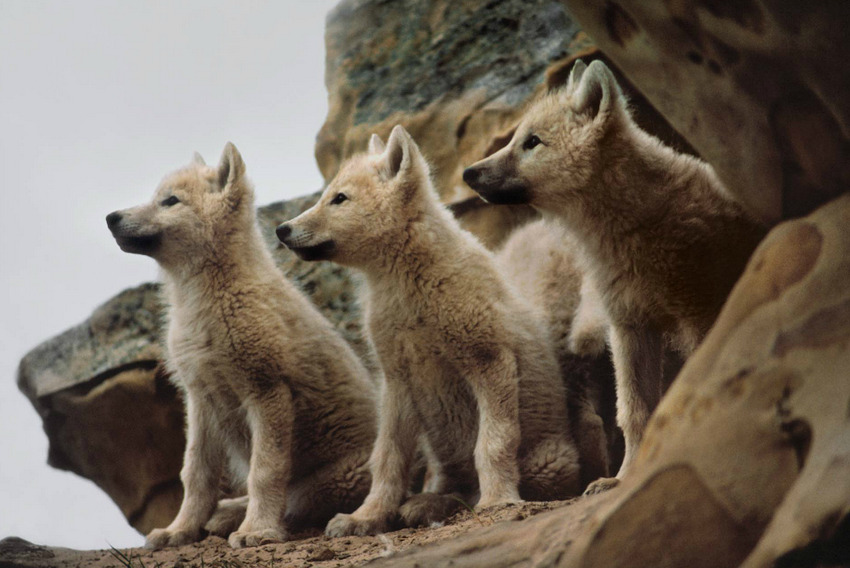
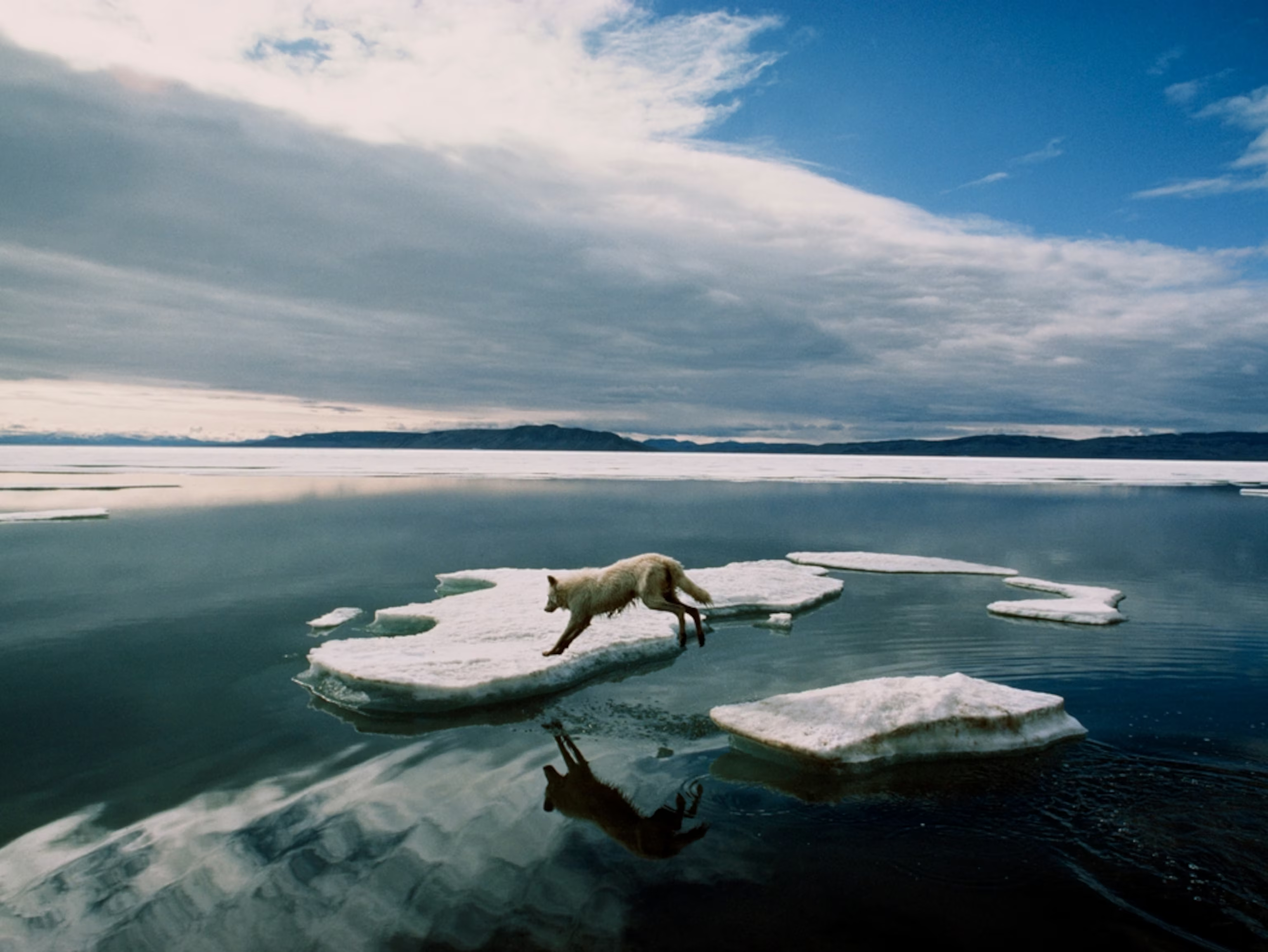
While we’re on the subject of wolves, one of my photographer heroes died on April 4 of this year. Jim Brandenburg was his name and most Minnesotans have seen his work, even if they didn’t always know his name. He had two galleries, one located in Luverne MN, where he grew up. The other was in Ely MN, one of my favorite places in the world.

One of his recurring subjects was the wolf, and perhaps his best known photograph was this one, “Brother Wolf.”

Brandenburg’s work was published many times in National Geographic magazine, giving him a following well beyond the borders of my old home state. Every one of the photographs in every one of those books he published is so good it makes me want to just throw away my camera. Truly extraordinary.

Here’s the briefest of galleries of his work. Want to make someone who loves the natural world happy? … give them one of his books, or perhaps a print. Or, even better, a print and a book.
******

David Brooks is my favorite kind of conservative. One with a functioning cerebrum. His op-ed piece in Friday’s Times is spot on, and quite different from his usual take-it-easy approach. The title of the piece gave me a chuckle.

WHAT’S HAPPENING IS NOT NORMAL. AMERICA NEEDS AN UPRISING THAT IS NOT NORMAL.

What he is saying is what a growing number of grassroots organizations have been telling us for a while now, and having only relatively recently waked from my own personal stupor I am glad to see Brooks join the movement.

So far, we have treated the various assaults of President Trump and the acolytes in his administration as a series of different attacks. In one lane they are going after law firms. In another they savaged U.S.A.I.D. In another they’re attacking our universities. On yet another front they’re undermining NATO and on another they’re upending global trade. But that’s the wrong way to think about it. These are not separate battles. This is a single effort to undo the parts of the civilizational order that might restrain Trump’s acquisition of power. And it will take a concerted response to beat it back.

David Brooks: What’s Happening Is Not Normal, New York TImes of April 18, 2025.

So David is thinking about hitting the streets, and that will be good for his soul and the causes he believes in. He will attract others more cautious than he is. If enough Brookses and like-minded folks get out there together under the same banner the right will prevail. History has shown the way.

I remember the day when, after years of scattered protests and much impassioned rhetoric that I watched the news and saw a very large parade of mothers marching against the war in Viet Nam. It was at that moment that I knew the war was finally over, and President Nixon was going to have to wind it down the best he could. Such a broad and passionate political force could not be withstood, and he was smart enough to know it.

Cluck’s lust for power has already created an effluvium that now touches the life of every single person in this country, mostly for ill. When enough people wake up and realize what is happening to them, there won’t be a parking place to be found anywhere near the rallies that will erupt around the US. At that point, this “war,” too, will be over.

******

(Migra or La migra is an informal Spanish language term for U.S. Immigration and Customs Enforcement (ICE), United States Border Patrol, and related institutions. It has negative connotations)

******

Goosed

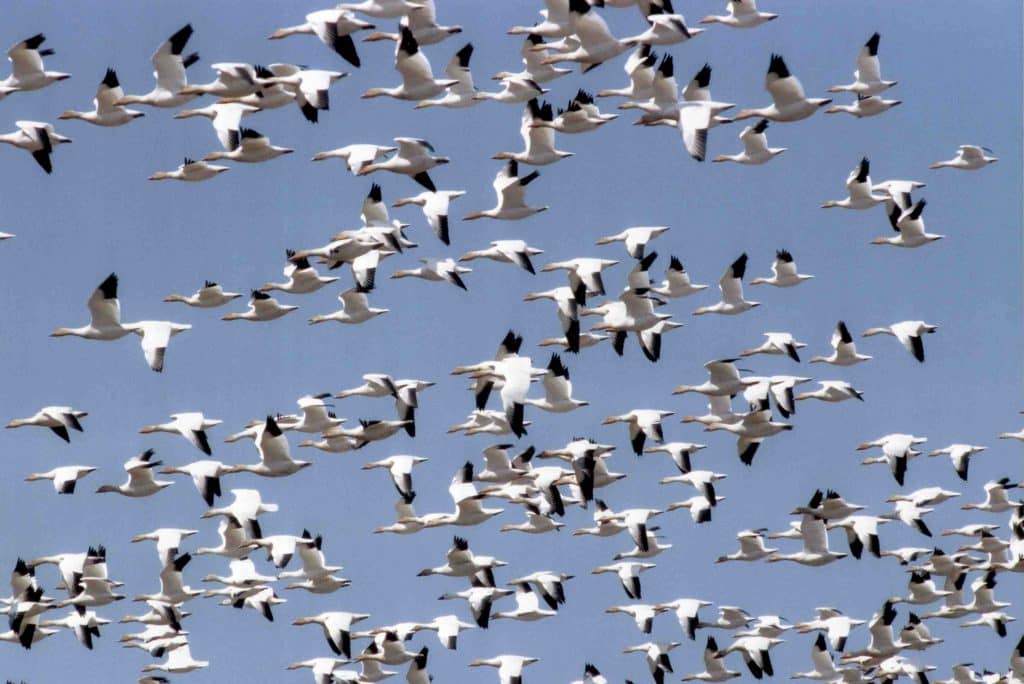
There is a wonderful film out there called Winged Migration that I can recommend highly. If you have never seen it, perhaps your library has a copy to borrow, or you can rent it on Amazon for less than four bucks. It documents the truly amazing journeys of many species of birds around the world. The hardships they face, sometimes overcoming and sometimes … well … you have to see the film to appreciate them, I think.

One overarching theme is how long these epic flight paths have been in existence, and what changes have gone on in the world beneath their larger family over time. But the earth turns, the birds fly, and even if our own species eventually self-destructs, the migrations will go on and on. They are ancient, much more durable than humans and their dramas. What is obvious is that we rarely have a positive influence on the natural world. We are more of an insult.

But enough of this light-heartedness, let’s get serious for a moment. I don’t know if you can call it courage as we define it in our own lives, but these migrations seem courageous endeavors to me. If I could flap my arms and once travel even ten miles to a new location, I would be crowing about it for the rest of my life.

We have a tendency to denigrate the achievements of other species, our calculations somehow always making us come out at the top of the heap. It’s just instincts, we say, implying that these “lower” animals don’t put much thought into what they are doing. (Birdbrains, we call people who are missing a card or two in their deck.)

One of our problems in understanding other species is that we keep using our yardsticks to do the measuring. We prize problem-solving, so any creature that seems limited in that way is lesser. We are enamored of our houses, our tools, and our intellectual achievements. Never mind that our evolution to a “spiritual being” has resulted in widespread murder and injustices as our history reveals members of one group after another happily plotting the bloody demise of the other groups.

Nope, if I want to look for models of good behavior for a citizen of this planet, I have to look outside of our species. Take the greylag goose, for example. Both sexes care for the young, they travel in flocks where some members stay vigilant while others rest. They mate for life, which is something humans talk about but fail to do a great deal of the time. Up to 20 per cent of greylag geese are homosexual, which doesn’t seem to upset the other members of the flock one bit. And greylag geese have never ever committed genocide.

So I keep an open mind, because being called “silly as a goose” may not be such a bad thing after all.

******

Flying, by The Beatles

******

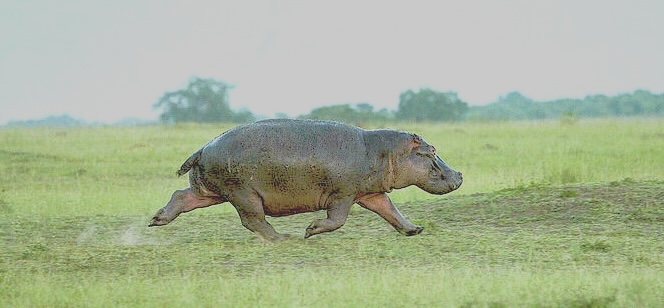
Think about it for a moment. We can’t fly, can’t breathe underwater, have relatively poor eyesight and sense of smell, couldn’t grow a fur coat if we tried, and our top speed is not quite as fast as a hippopotamus. 

A tiger would smell us before we came into sight, spot us way before we could see it, and would be drooling at the finish line with a knife and fork in hand and a napkin tied neatly under its chin.

Add to this humbling scenario the fact that our young take more than a decade before they can fend for themselves and you wonder how we got this far as a species. If we hadn’t developed tools and weapons we would probably be no more than another case of scratchings on a Siberian cave wall that said Glorg Wuz Hear.

******

I’m A Song, by Stephen Wilson Jr.

******

It’s starting to get interesting (as in the curse: May you live uninteresting times). We may have a recession coming at us, which if it does, is clearly the work of only two men and their party. Usually recessions are a bit more nebulous in origin, but if this one arrives it will be the Truskcession for certain. Of course, if it weren’t for a spineless Republican party, they couldn’t mangle our economy the way they are doing. Have to give credit where credit is due.

******

******

Wind Behind The Rain, by Jason Isbell

******

Moving On

A bit about our family story. Every family has its tales, and this one is about geography. I moved from Michigan to South Dakota with my former wife and four kids. This was in 1980. Within seven years all had fled the state but me. My children ended up in a variety of places, including Minnesota, North Carolina, Missouri, China … but none of them anywhere near where I was living.

After a few years of bachelorhood I married Robin, and took up residence with her and her three children. Robin was 11 years my junior, so her children were still in school in Yankton SD. But within a decade that trio had also packed up and left, this time headed for Colorado.

Robin and I had good friends in South Dakota, so stayed right where we were. Until a new crop of grandchildren started to appear, that is, who were all out there in the Rockies. Eventually those small creatures proved to be very powerful magnets, strong enough to draw us out to the mountains. We triangulated and chose to live between these pockets of kids, who were located in Denver, Steamboat Springs, and Durango. The closest to us was a 2.5 hour drive, the furthest was 6 hours away.

Today those grandchildren live in North Carolina, California, and Texas, with only one still here in the Columbine state. That last survivor is still in high school, so who knows where she might choose to settle once she graduates? It’s a common story of familial mobility, with nobody presently living anywhere near where they grew up, including Robin and I. There is no “old home place” for anyone of us to return to, except for the one we carry with us in our minds. Our blended family empire now stretches from Washington DC to Walnut Grove, California. Making in-person contact with everyone, every year, has not been always been possible, especially as the years pile on.

But I do have some small sense of what those mothers and fathers felt long ago as they watched their children walk up gangplanks onto ships that would take them to the New World, when the possibility of never seeing them again was always present. Those wharfside moments must have been some serious tug on the heart.

******

Wooden Ships, by Crosby, Stills, and Nash

******

Some new birds showed up on the berm in our front yard this week. I identified them as a pair of lesser goldfinches. Very pretty coloration, although not quite as showy as the variety of goldfinches who came to our feeders in South Dakota. They were picking through the dried heads of the black-eyed Susans for seeds that other birds had missed.

Jabbering clouds of yellow, green, and black Lesser Goldfinches gather in scrubby oak, cottonwood, and willow habitats of the western U.S., or visit suburban yards for seeds and water. These finches primarily eat seeds of plants in the sunflower family, and they occur all the way south to the Peruvian Andes.

All About Birds

(The black eyed Susans we saw them chomping on out front are in the sunflower family, just like the book says they should be.)

******

Drift Away, by Dobie Gray

******

From The New Yorker

******

One of the joys of streaming television is locking on to a program that enriched you in some way, and then being able to revisit it down the road whenever you want to. Taking the same lessons away that you originally did, or finding new ones because you are not the same person you were then.

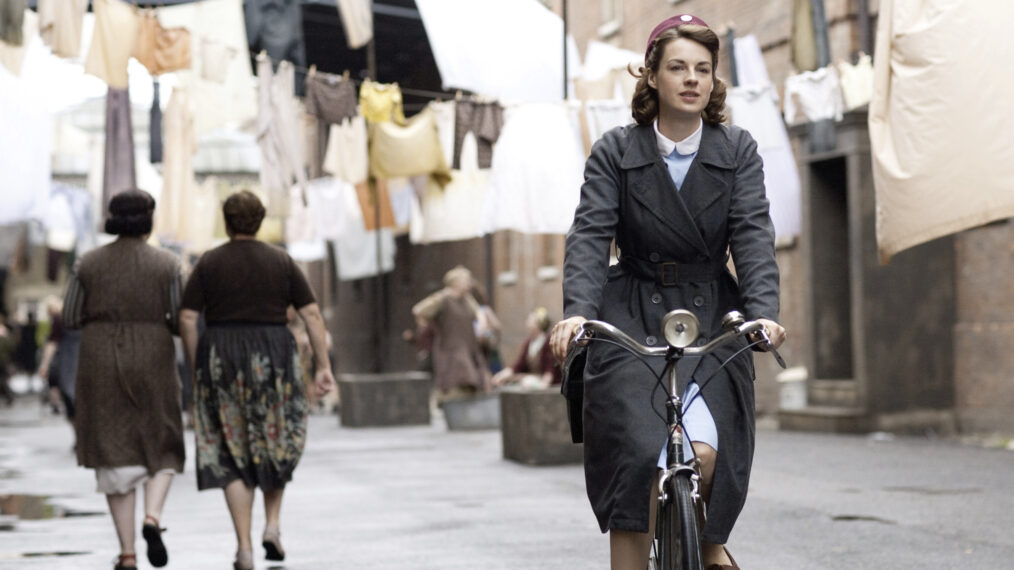
Robin and I are revisiting Call The Midwife. A series that ran for 13 years. One of those rarities where you could believe in all of the characters as they grew older or grew up. It begins in London, in a neighborhood named Poplar. A part of town that is about as far from posh as you can get.

A small group of nuns operate a public health nursing/midwifery service, being assisted by young female nurses who are laity. Many other characters round out an excellent ensemble.

The timing of the series begins in 1957, when the last of the rubble from WWII has barely been cleared away. There are sentimental stories mixed in with large doses of the profound grittiness that is life in Poplar. None of them rings false. Some nights, like last night’s episode about the harms perpetrated by the old London workhouse system, can be a hard watch, actually.

The people who put this series together did their research. Seeing what was available as medical/nursing care in 1957 in a poverty-stricken area and watching this evolve over more than a decade was very engaging for me.

It’s a series where no one is omniscient and mistakes are sometimes made, but the major characters have one thing in common, and that is devotion to helping people. The show has a beating heart.

On Netflix.

******

Rank Stranger, by Crooked Still

******

From The New Yorker

******

Oh me, oh my. The company that kept me alive for five years has gone under. Is kaput. Those yellow trucks will no longer be rolling up rural driveways bringing real food to malnourished bachelors. I am, of course, talking about the Schwan’s company.

When my first wife had taken her Le Creuset cookware and moved on to better things, I found myself in a medium large house with a full kitchen but without the will to cook anything. I gave up on meal planning altogether and allowed the package to determine what supper was going to be. One of my favorite dodges was to buy a package of hot dogs and eat that every evening until it was gone. Eight dogs in a package eaten at the rate of two dogs a night meant that four days were covered. I was not fool enough to believe that I was eating healthily, since I knew that one cannot live on fat and pig lips alone, but that reckoning was for some future day and I was hungry right now.

Bread would go moldy, anything in the fridge in Tupperware became a culture medium for some of the most colorful fungi I have ever seen. Works of art, really. I had acquired a microwave oven for the first time, but had not taken the time to learn how to use it properly. It worked well for heating water, but when I would put anything that was meat into it what came out was more suitable for making shoes than for eating.

And then I discovered Schwan’s. An entire yellow truckful of deliciousness would show up in my driveway and all I had to do was to pick out what I wanted and give the man some money.

No waste, no steady streams of hot dogs, no interesting growths in the refrigerator. Instead I could eat chicken cordon bleu and it was pretty darn good for frozen food. Plus I now found something to do with that microwave sitting useless on the counter.

So I experienced a tender moment this morning when I read about the company’s struggles over the past decades, and their painful decision to retire the fleet. If it means anything to them, I am here typing this only because they fed me when I was a man in need.

******