The somber tone of the last couple of postings is because I am a bit more somber these days. I recently lost an animal friend who was very dear to me, and anyone who says that cats can’t be warm and attentive and affectionate … well, they lack knowledge and experience, because in a way cats are like mirrors. If we come at them with kindness and interest it is reflected back manyfold in our direction.
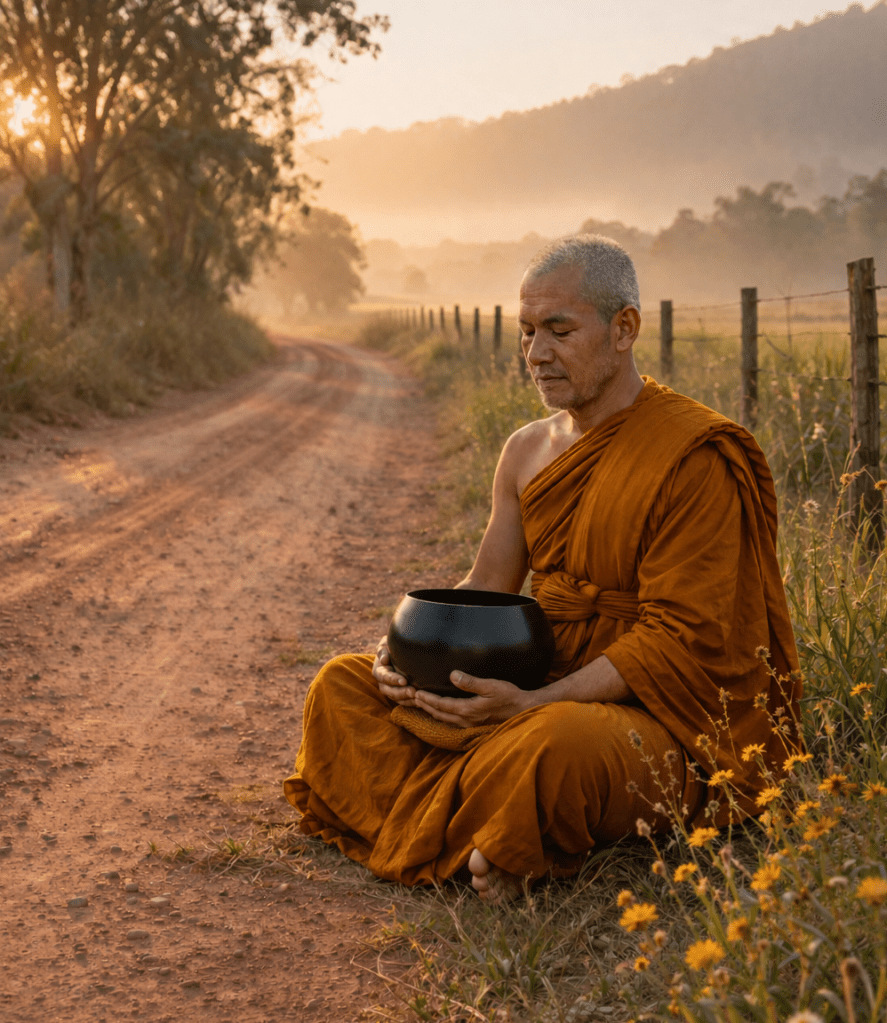
It’s like the Buddhist tale of the monk sitting at the side of the road with his begging bowl. A traveler came by and asked “What sort of people live in that village up ahead?”
The monk answered “What sort of people live in the village you have come from?”
“Well, they were spiteful and empty-headed and living with them was a struggle from dawn to dusk. I couldn’t bear their company any longer.”
“I think you’ll find the people in this village are much the same.” And that traveler continued on.
Later, another pilgrim came to where the monk was sitting along the road and asked the same question .
“What sort of people live in that village up ahead?”
“What sort of people live in the village you came from,” was the reply once again.
“They were the nicest folks you could ever want to meet. Always friendly and sociable, and if you needed help all you had to do was ask and several of them would step forward.”
“I think you’ll find the people in this village are much the same,” the monk said.
******
The Grateful Dead song Ripple is an all-time favorite for me, ever since I first heard it on the soundtrack of the movie Mask. There are many cover versions out there, but I doubt there’s a better one than this. Two women respecting the music and making it their own. I was completely charmed.
******
No Kings 3 is just three days away. There will be massive displays of peaceful protest and solidarity in the great cities around the US, and we will have our own smaller version here in Paradise. Each day Cluck does something ugly that gives more people the motivation they need to get up and out on the street.
There will come a day when the only people who will stand with him will be a handful of the MAGA cult members. They are a nasty bunch, and it is ultimately not possible to keep a group like MAGA together that is completely based on spitefulness, fear, and hate.
******
ScreenshotScreenshot
******
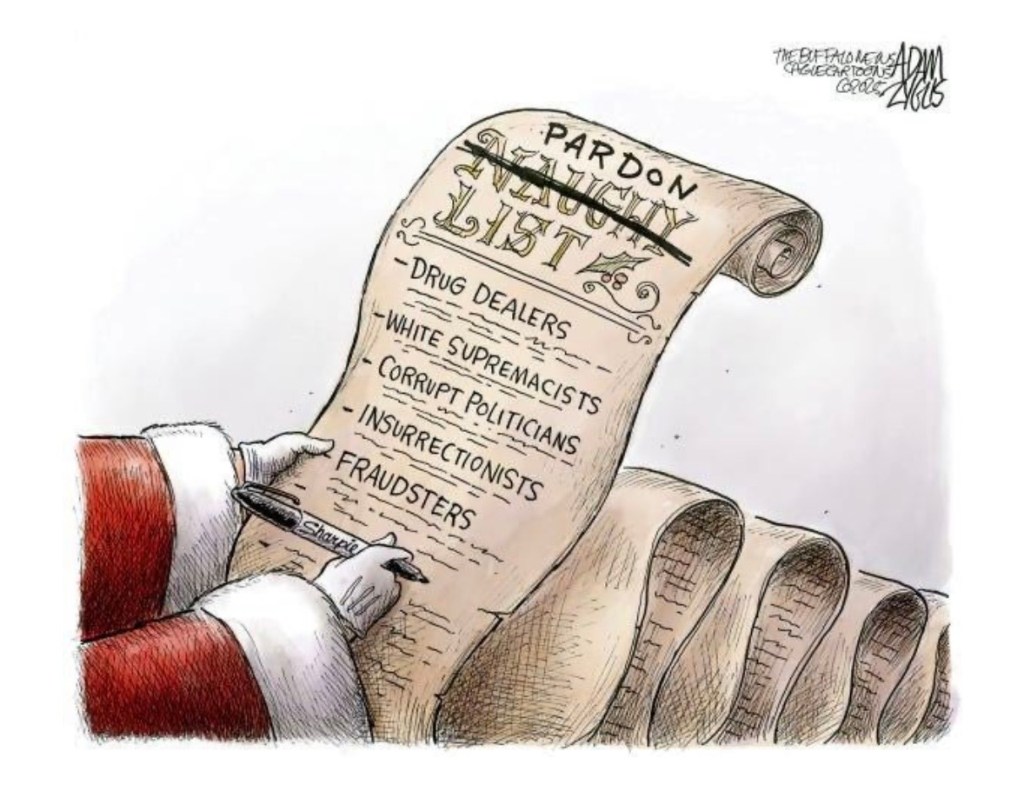
The snake cartoon above says it all for me. Whatever the Republican Party once was it has ceased to be anything but a gaggle of Cluck enablers and lickspittles. Here in Paradise the politicians from that party are far too often of the dunderhead variety. Last summer a brand-new Republican county commissioner was successfully recalled for rampant stupidity and boorishness of the first order.
When this inept national regime falls, I could care less what happens to the present-day GOP. I would, however, very much like a respectable and honorable conservative political party to arise. Although the Democrats seem to finally be realizing that they are standing waist-deep in a manure lagoon that they helped fill because of fecklessness in their role as an opposition party, they seem to require a worthy opponent to keep them on their toes.
******
The daily news is so rife with horrible that it is easy to get off to a bad start in the morning, when you are being served with what seems an endless procession of humans behaving badly. But if I walk out the door and talk to people about their lives, I find a different principle at work. One that is so very powerful and enduring. Love, actually.
There are parents sacrificing for their children and children sacrificing for their parents. There are people working selflessly for peace, the environment, and in the struggles against disease and ignorance. There are friends helping their comrades across streets when their strength is failing. People who leave anonymous gifts at the doors of the less fortunate. The courage, compassion, and determination of the people of Minneapolis who refused to yield their freezing streets to the thugs of ICE.
Borders bookstores went bankrupt in 2011, not because they weren’t pleasant places to lose oneself in, and perhaps down a well-made coffee while doing so, but because their management lost its way in the digital forest which had materialized around them. That happened to lots of businesses just as worthy, especially when they didn’t look back over their shoulder and see Amazon pulling up behind them.
But while the chain was still alive it was at least partly responsible for my becoming a Buddhist. (My calling myself a Buddhist, however, is a claim that the National Association of Buddhists vigorously rejects, and I am picketed by orange-clad monks whenever I appear in public under this banner). It happened this way.
I was in a spiritually vulnerable state, having just come to the end of the fourth volume in the Joseph Campbell series entitled The Masks of God. To say that I was unmoored in that department would have been an understatement. But there on a small table just as you entered the Borders store in Sioux Falls SD was a collection of books on Buddhism, and smack dab in the center was one with the name Buddhism Without Beliefs by Stephen Batchelor. I went for it, read it, went back for more books on the subject, and that was the beginning of a new way of looking at the world and beyond.
After a lifetime of being told that one way was the truth and that was all there was to it, the openness of Buddhism was what was attractive. It also followed a quasi-scientific method which was appealing to someone who thought of himself as a scientist. Those writers told me not to take their word for things, but to find out for myself. And that is what I have done now for the past thirty years.
It’s all Borders’ fault.
Before that adventure with the small table at the bookseller, my only real exposure to Eastern thought had come from a phrase in the movie Beyond Rangoon, where a wise Buddhist man says to the heroine: “Suffering is a promise that life always keeps.” To a man with a strong melancholic streak, this told it like it was.
******
Out In The Streets, by Trio
******
FORSHAME DEPARTMENT
Last October there was, of all things, a comedy festival in Saudi Arabia to which many American comedians were invited. The money offered them was apparently good enough to quiet any qualms they might have had about the Saudi government’s appalling human rights record, tangential participation in the 9-11 tragedy, and its role in the murder and dismemberment of journalist Jamal Khashoggi. Saudi leaders seem to believe that if they sponsor enough non-bloody entertainments that we will forget what sanguineous SOBs they are.
Many of these comedians were already very wealthy people who really didn’t need the money. I was disappointed to find several of my favorites on the list, but I will not bother them any longer with my attention or support. Below is the list.
Mo Amer
Aziz Ansari
Wayne Brady
Hannibal Buress
Bill Burr
Jimmy Carr
Dave Chappelle
Louis C.K.
Whitney Cummings
Pete Davidson
Chris Distefano
Omid Djalili
Zarna Garg
Ben Hart
Kevin Hart
Gabriel Iglesias (“Fluffy”)
Jim Jefferies
Jimeoin
Maz Jobrani
Jessica Kirson
Jo Koy
Bobby Lee
Sebastian Maniscalco
Sam Morril
Mark Normand
Russell Peters
Jeff Ross
Sugar Sammy
Andrew Santino
Andrew Schulz
Tom Segura
Ali Siddiq
Aries Spears
Chris Tucker
Jack Whitehall
Every one of these men and women now knows their price. Knows just how much it took to turn them into dancing bears performing for the amusement of some very unsavory people, some of whom were quite capable of cutting a man into pieces and hauling him away stuffed into luggage.
******
Screenshot
******
Da Da Da, by Trio
******
Let me tell you the story of my vasectomy. Oh, don’t worry, we won’t go into barf-inducing technical details, it’s more the staging that I plan to talk about.
First of all, the need for such a procedure had become evident, because of my superpower, which was that I was exceedingly fertile. Because of this inborn “talent,” I had already accumulated four lovely children, and there didn’t seem to be any other reasonable way to avoid having that number keep climbing into double digits.
So the preliminaries had been accomplished at a previous visit, and all that was necessary now was for me to show up at the surgeon’s office and within a few minutes one of my problems would be over. All of this was happening during the final weeks of my pediatric residency, in 1969.
So I took a long lunch hour, drove to the doctor’s office, and was taken to the operating suite. I reclined on a table where a low curtain was placed across my chest so that I could see the face of the physician above the curtain, but not the operative area. As was usual, the procedure was to be done under local anesthesia, with me fully awake.
As I lay there, helpless and half-nude, the surgeon injected the anesthetic and then leaned toward me and said: “We have nursing students with us today, would you mind if they observed?”
Now you have to remember that I was at the end of a seven-year training program, and along the way perhaps hundreds of patients had been asked this same question so that we students could learn from each one of them. So I was either going to be a hypocrite and refuse, or ignore my misgivings and let the observers in.
“No, I don’t mind at all,” I lied.
Whereupon six young women were ushered into place around the operating table. I could easily look over the curtain and into all of their masked faces as the next minutes passed and I was being rendered (hopefully) infertile. As the minutes ticked off I watched them closely, thinking that as long as no horror or amusement was expressed in any of those twelve blue eyes my little surgery was going as planned.
Soon enough the students were led from the room, the physician tidied things up, and I dressed to go back to finish my workday at the University of Minnesota Hospital. But the memory of the time when the tables were turned is an indelible one.
******
These Are The Days, by Van Morrison
******
The mild December days continue here in Paradise. Nights get down to the mid-twenties, but daytime temperatures are around fifty. Our valley is snowless, although higher up there is enough of the white stuff to allow the ski areas to open. I am content. Although there used to be something deliciously primal about the feeling of being at home while a blizzard howled outside the window, it is not a feeling that I will be deliberately seeking out any time soon.
Winters as a youth in Minneapolis were something quite different. Plugging engine heaters into the electrical grid to ensure that the cars would start in the mornings. Daily shoveling snow away from the entrances and sidewalks. Patches of ice that hid themselves like highwaymen, waiting for unwary feet to strike them and the human attached to the feet become briefly airborne. Running your car for fifteen minutes just to make it habitable for the drive to school or work.
One below zero day when I was about seventeen, as I was walking to my job at a local grocery store in the early morning dark, I failed to protect my right ear. When I reached the store the ear was had a dead white appearance. As it thawed it became painful, and then it swelled to twice its size and became bright red in color. I didn’t lose any part of the ear, but I learned first hand just what frostbite was all about.
As much as I have loved camping, and have been willing to tolerate all sorts of inclement weather as a part of the experience, I could never work up any enthusiasm for winter camping.
.
The idea of coming back to the tent after a day’s activities and then sitting about congealing in freezing weather seemed … not me. I could be accused of that indefensible intellectual position described by Herbert Spencer.
“There is a principle which is a bar against all information, which is proof against all arguments, and which cannot fail to keep a man in everlasting ignorance—that principle is contempt prior to investigation.”
Herbert Spencer
It is true. I should not belittle an activity that apparently brings joy to thousands of people. I have done it only once, and that was for a single night. I should definitely stop thinking of those who pursue the practice of winter camping as “not quite right in the head” (to quote my Grandmother Jacobson). While I have my suspicions on the matter, I must accept that they may actually be quite sane, just in their own peculiar way.
We had guests recently, and it turned out that we had some tasty pastrami left over, and I wanted to do something out of the ordinary (for me, that is) with it. So I decided on making Reuben sandwiches. For no good reason at all we never do Reubens so I bought some sauerkraut and thought I was okay. But I learned that there was more to it than I imagined, including the fact that Reubens are not made with pastrami but corned beef.
Oy! as my friend Rich Kaplan would have said while shaking his head in such situations, you are the whitest person I know!
Here is what the recipe called for:
rye bread
Russian dressing
Swiss cheese
corned beef
sauerkraut
Here is what I had on hand and made into our sandwiches:
rye bread
mayonnaise
pepper jack cheese
pastrami
sauerkraut
Not even close, was I? I was almost ashamed to put them on the table and I explained to Robin how it all happened and I hoped she wouldn’t think less of me and they were probably going to taste ridiculous and could we go out to eat if the sandwiches were inedible?
But … they were totally delicious. Not wishing to confuse the issue any further, I decided to give them their own name. Now, Reuben is a name taken from the Old Testament, and means “Behold, a son.” So I thought I’d turn to that august resource in my quest.
I picked Samuel. It was also Old Testament in origin and one of its meanings is “God has heard.” As in prayer. As in what I did when I realized that I was short several key ingredients.
So, my friends, if you drop by any time soon unannounced you might be served something like a Samuel. Let me know a day ahead and I’ll round up the right ingredients and make you a proper Reuben.
******
Low Low Low, by James
******
ScreenshotScreenshotScreenshot
******
At the Thursday morning AA meeting this week, there were only six of us, all over sixty years old. It was a particularly enlightening get-together, starting with a reading from the book Daily Reflections. The last line of the reading went as follows:
… I practice a discipline in letting go of selfish attachments, caring for my fellows and preparing for the day when I will be required to let go of all earthly attachments.
The line struck me as soooo Buddhist, and I mentioned my feeling to the group. As we went around the tables each of us picked up on the theme of living a life with an eye cast toward its end, and it was interesting to hear from each member as they made their contributions. If there had been a younger member in the room that morning, they might have been repelled or bored to death by such musings, I don’t know. But to the six of us present talking of life and death was as natural as breathing.
******
Brown Eyed Handsome Man, by Buddy Holly
******
I do try to keep you all abreast of significant happenings in the world of cheese. I really do. But this year’s world competition sneaked up on me and dang, it was all over before I knew about it. This year a Swiss Gruyere won, but I’m not racing down to my local grocery store to look for it, because the production is small and the chances of a sample making its way to Paradise are the same as Kristi Noem being named Animal Friend of the Year by the ASPCA.
But there was a link in the article that caught my eye, suggesting something was the most dangerous cheese in the world. I mistakenly read the article, and now I am trying to find something to read that erases what I learned from my memory completely. All I will say is this – no freaking way would I knowingly have a bite. My suggestion would be to not follow the link I have provided and definitely not read the article.
******
I’ve been a fan of the group U2 for more than forty years now. There have been a few albums that really hooked me and a few that I let slide and forgot about, but overall I notice that I responded most to those that explored social justice or spiritual themes.
Favorite album = The Joshua Tree, from 1987, no contest. Favorite song on the album … one of the most moving tunes I’ve ever heard … Mothers of the Disappeared.
.
I would never have guessed that one day I would be playing that song while listening with new ears and appreciation. Because now we have our own version of Los Desaparecidos taking place here in America, what with the criminal gang ICE wandering our cities wearing masks and pulling people off the street without any pretense of following the law.
There will be a reckoning for these mobsters one day, their members’ names are being taken, in spite of the masks. But in the meantime brave citizens across this country are doing what they can to make ICE’s predations as difficult for them as they can.
What a challenge it is to live in what only can be called a rogue country and be governed by people you wouldn’t offer shelter to from a blizzard. There will be an end to this, I know, but Lord does it ever add a bitter taste to each day. When this rancid lump of spray-tanned avoirdupois is finally out of office and off the front pages perhaps we will have learned some lessons we need to learn to prevent another such dark time.
I say perhaps because if there is a lesson that I have taken to heart in my time on earth is that we know … the knowledge exists … of how humanity can live together in peace. We know how to feed one another, shelter one another, support one another, respect one another. We could do it. The problem has always been that we allow selfish considerations to keep us mired in mistrust and conflict.
A line from the King James version of the Bible offers a way of looking at the otherwise incomprehensible mess that is planet Earth, at least for me.
Father, forgive them, for they know not what they do.
Indeed.
******
Mothers of the Disappeared, by U2
******
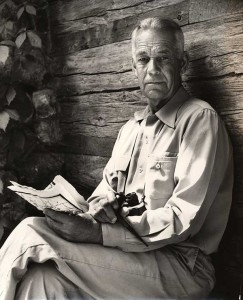
Here’s one of those true stories that can get friends going on for hours in a friendly fashion on a winter’s evening. Sigurd Olson was a northwoods guide, professor at a community college, author of more than a dozen books on wilderness, and a major player in getting the Boundary Waters area of Minnesota declared as a wilderness.
Any bookstore in northern Minnesota will stock Olson’s books, and I have read several. His first was named Singing Wilderness, and was published in 1956.
Olson lived with his wife in a modest home in Ely MN. Out back of the house was a small shack where he did much of his writing. On January 13, 1982 he had been working in the shack but decided to do a little snowshoeing and died out there of a heart attack.
On attending to his affairs this exact note was found which he had written earlier that day on his old typewriter.
(The print in the photo is rather small, so I will repeat it: “A new adventure is coming up and I’m sure it will be a good one.”)
Soooo, friends, did he have a premonition of his death? Or do people … some people anyway … read more into these few words than Olson meant? If you came over to visit this winter, we could make hot cocoas and argue about it until we tired and took to our beds. If we found that we really liked each other, we could argue about it the next night as well. I think that two successive nights would about do it.
I can point to a short list of writings that have been truly formative when it comes to my view of life as a human being on a small planet. Their messages somehow stuck in a brain that too often seems to have a teflon surface, allowing many bits of knowledge that might have been important to fall to the floor and be swept away with the crumbs of that last bag of Cheetos. Put these books together and they could easily be carried in a knapsack.
What might these wonders be called, you ask? Here’s my list:
Wherever You Go, There You Are, by Jon Kabat-Zinn
The Bible
Buddhism Without Beliefs, by Stephen Batchelor
The Power of Now, by Eckhart Tolle
Lonesome Dove, by Larry McMurtry (yes, yes, a Western novel)
The Four Agreements, by Don Miguel Ruiz
At the head of the class is “The Four Agreements.” I really didn’t fully take it in until the second reading, and each subsequent perusal has reinforced its lessons. It is a straightforward owner’s manual for a freer life. Free of what, you say? Well, of shame and self-hatred and personal bigotry, just to mention a few items.
Be impeccable with your word: Speak with integrity, meaning, and truth. Use the power of your word to express yourself and your needs, rather than to speak against yourself or to gossip about others.
Don’t Take Anything Personally: Nothing others do is because of you; their words and actions are a reflection of their own reality, not yours. You won’t be the victim of needless suffering if you are immune to the opinions and actions of others.
Don’t Make Assumptions: You avoid misunderstandings and drama by finding the courage to ask questions and express what you truly want. Communicate clearly with others to prevent confusion and sadness.
Always Do Your Best. Your “best” is not static; it changes depending on your health, energy, and the circumstances of the moment. Accept that your best will vary and give your all in every situation.
Simple, right? Turns out that I like simple very much.
******
There Is No Frigate Like A Book
by Emily Dickinson
There is no Frigate like a Book To take us Lands away
Nor any Coursers like a Page Of prancing Poetry –
This Traverse may the poorest take Without oppress of Toll –
How frugal is the Chariot That bears the Human Soul –
***
Emily, by Los Lobos
******
What’s missing from the list above? Well, almost anything written by the man who I took as my teacher, even though we never met. His name is Thich Nhat Hanh. A Buddhist monk who worked all of his life for peace, and who taught that the way that I can contribute to peace in this world is to become peace in myself.
He told a story taken from the tragedy of the boat people in Viet Nam, who fled the country after the turmoil of the war. Of a twelve year-old girl who was raped by pirates and who then threw herself into the sea to drown.
She was only twelve, and she jumped into the ocean and drowned herself. When you first learn of something like that, you get angry at the pirate. You naturally take the side of the girl. As you look more deeply you will see it differently. If you take the side of the little girl, then it is easy. You only have to take a gun and shoot the pirate. But we can’t do that. In my meditation, I saw that if I had been born in the village of the pirate and raised in the same conditions as he was, I would now be the pirate.
This story gave rise to a poem of his, Please Call My By My True Names. Here is a recording of Thich reading his poem.
Please Call Me By My True Names, by Thich Nhat Hanh
These days I am finding this teaching of his helpful in dealing with the conundrum posed by living among MAGA adherents. My first impulse when I hear one of them speak is usually to want to part the person’s hair with a stout cudgel. What holds me back is a suspicion that “if I had been born in the village of the pirate and raised in the same conditions as he was, I would now be the pirate.” Substitute MAGA for pirate and there I might be.
I have no illusions about anyone being able to love these misguided ones back to happy normalcy. They are people so filled with hate and anger and fear that some of them are actually dangerous as a result and are quite capable of committing violent acts. But I can keep myself from letting their fear and hatred infect me by realizing that repulsive as their thinking and behaviors might be, I need not answer them in kind. It is chance that put me on one side and not the other.
******
A Life of Illusion, by Joe Walsh
******
******
I am reclaiming for myself the word “comrade.” For most of my life, that word was ceded to Communists for their private use by books, movies, plays … not a single one of the good guys in those stories was ever called “comrade.”
Comrade: a member of the same political group, especially a communist or socialist group or a labor union
Cambridge English Dictionary
But I like the word. It feels good rolling off the tongue. Do you know of a better expression of solidarity with someone, or a group of someones? So I am taking it back. Sorry, all you Communists and Socialists and Bolsheviks and Mensheviks … you have to share. It’s the right thing to do.
Comrade: a friend or trusted companion, esp. one with whom you have been involved in difficult or dangerous activities, or another soldier in a soldier’s group
Cambridge English Dictionary
And how appropriate for these troubled days we’re living in. Difficult or dangerous activities? You might call protesting the governance of a madman with a secret police force of masked unprincipled thugs a risky enterprise. A man who is presently showing us his disdain for life and the law by blowing up boats and the people in them? I don’t want to overstate things, but I don’t put anything past the noxious criminal at 1600 Pennsylvania Avenue.
So if I call you comrade, I hope that you don’t take offense. Even if you don’t particularly care for the term, I am expressing my respect for you and what you are doing.
******
EXPLANATORY NOTE: I have made a small change in the image on the margin of these digital pages, substituting the Straw Hat pirate flag for the upside-down American flag. The Straw Hat pirate flag has come to symbolize freedom, dreams, unity, and defiance against oppression. Although its origins are in a comic strip, in the real world the flag has been adopted by protesters in countries like Indonesia, Nepal, the Philippines, England, France, and even the United States as a banner for youth-led protest and resistance to authoritarianism. I may not be a youth on the outside, but my inner child (NO FAIR!I’M TELLING!) has definitely been awakened and is now pulling many of my strings.
And, BTW, my inner child loves the pirate flag.
******
MEMENTO MORI
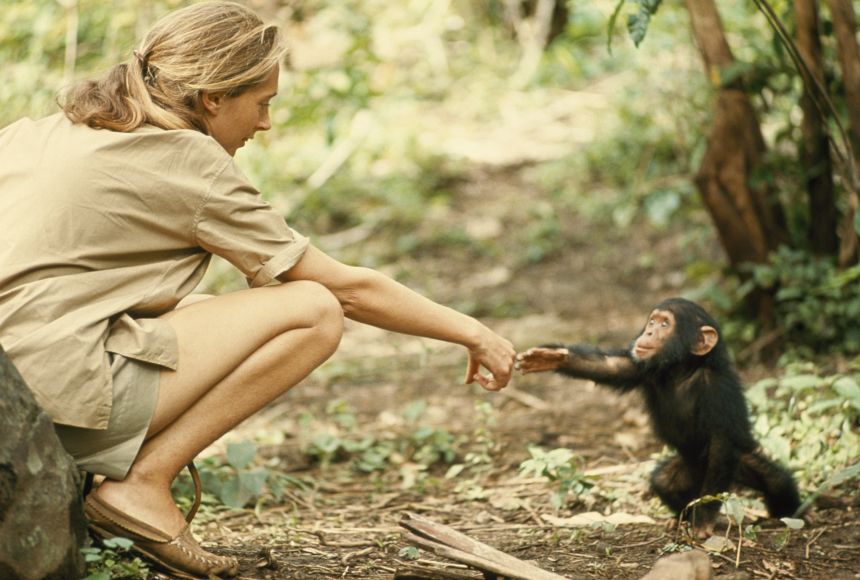
Earth lost a real human being this past week, which is really too bad. There are never enough of them around. Jane Goodall came into my awareness in the late sixties and following her career has been an inspiration to me ever since.
Not a plaster saint, she was a forceful and determined worker for the rights of animals, including our own species. Wish I could’ve had her over for coffee, just to talk about those things that moved her most. Perhaps she’d have been too busy, what with working to save the planet and all, but I still could’ve asked. Missed that boat.
Well, let’s see … in only six months this charlatan has managed to turn a solidly evidence-based public health system into a caricature of itself. Rather than being a guardian, his office has now become a threat to our health and our welfare.
Apparently it has come as a great surprise to some, that turning the Department of Health and Human Services and the Centers for Disease Control and Prevention over to an idiot will produce idiotic results. People are already dying because of what he’s done and we have only begun to reap that grim harvest.
But an impressive array of medical organizations has now lined up against this fool and his tinted master and is calling them out for the quacks that they are. Among them, I am happy to report, is my own American Academy of Pediatrics. Proud of them I am. Proud of anyone who resists, who does not join the sorry ranks of the collaborators.
******
Robin and I are back in Paradise after a brief sojourn in Durango. I was with her for only the last three days of her stay, and it rained each of those days. Actual rain. During the same period not a drop fell on our home at Basecamp. Sheesh.
On one of those drizzly afternoons I found myself staring out the window at the birdbath, and found there was an impressive number of visitors coming and going. In just one hour I saw the following species:
Robin
Collared Dove
White-breasted Nuthatch
Red-shafted Flicker
Downy Woodpecker
Canada Jay
Steller’s Jay
Evening Grosbeak (dozens in a flock)
Ruby-crowned Kinglet
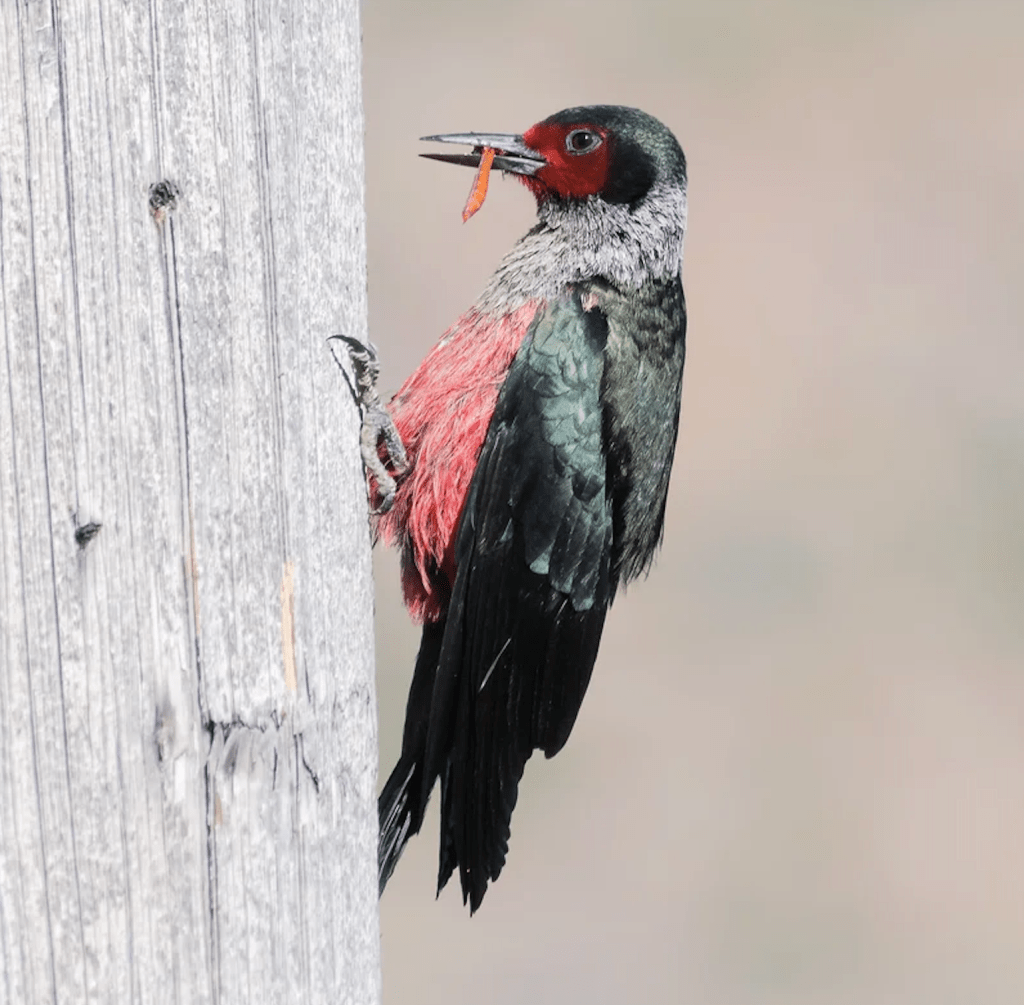
Lewis’ Woodpecker.
***
The last one on the list was a new bird to me, and I learned that it was named after Meriwether Lewis, who first described it.* The bird exhibits some very interesting and non-woodpeckery behaviors.
In the summer, Lewis’s Woodpeckers eat mostly insects, catching them in flight by swooping out from a perch like a flycatcher or by foraging in flight like a swallow. Their wide, rounded wings give them a buoyant, straight-line flight, more like a jay or crow than a woodpecker.
The birds seldom excavate for wood-boring insects; unlike other woodpeckers, this species lacks the strong head and neck muscles needed to drill into hard wood.
In the fall, Lewis’s Woodpeckers switch to eating nuts and fruit, chopping up acorns and other nuts and caching them in bark crevices for later consumption. During the winter they aggressively guard these storage areas against intruders, including other woodpecker species.
You may remember the age-old question: How much wood would a woodpecker peck if a woodpecker would peck wood? In the case of Lewis’ Woodpecker, the answer would therefore be precious little.
*Actually, Meriwether Lewis was the first person of European descent to describe it. The indigenous peoples knew about it for quite some time before he arrived on the scene. But the deal is, if you’ve got the ink and the quill, you get to tell the story.
******
Theme from Pat Garrett and Billy the Kid, by Bob Dylan
******
******
I call myself a Buddhist, even though I strongly suspect that hearing my claim would have brought tears to the eyes of Siddhartha himself. But I digress.
I have learned quite a lot in the past several decades that I might have overlooked without the guidance of a handful of Buddhist teachers. One of those things is the truth of the saying: “When the student is ready, the teacher will appear.” In my shallower days if I gave the saying a thought at all, it was: what a bit of quaint and magical thinking that suddenly there is a teacher where there was not one before.
I learned that was not what was meant at all, but then remember, I was shallow.
The phrase “When the student is ready, the teacher will appear” means that opportunities to learn and gain knowledge become apparent when someone is truly open and receptive to them, whether it’s through a formal teacher, a mentor, life experiences, or even an event. The idea is not that a literal teacher will magically show up, but rather that the necessary guidance, information, or opportunity will present itself once the student has cultivated the necessary mindset, awareness, and readiness for that specific lesson. The saying highlights that learning is an internal process of readiness, not just an external delivery of information.
(The above is an unasked-for paragraph that Google generated without being asked and displayed at the beginning of some search results. AI at work. I was prepared to be incensed when I noticed that it wasn’t such a bad paragraph at all and decided to share it with you.)
To simplify even further, when you truly open your eyes you see that there are teachers all around you. They were always there. You can hardly walk down the street without bumping into half a dozen or more. That windbag droning on at the AA meeting is giving instruction in patience and forbearance to everyone in the room. Valuable lessons that they will use over and over throughout their lives. That is, if they don’t fall into the trap of becoming annoyed and start looking out the window at the blackbirds on the lawn.
I know that I’ve said this before, but there was a point half my life ago when I realized that one of the best teachers I’d ever had was pain. At the time it was emotional pain, one of those dark nights of the soul that went on and on. Since that epiphany I’ve developed a habit of looking for the lesson at times of high stress and discomfort, wondering what it will be this time.
Sometimes the lesson is nothing more than this – I will survive.
******
That intrusive AI paragraph above just reminded me of a theme that runs through any discussion of artificial intelligence I’ve read. The theme that eventually, and sooner rather than later, AI will do us in. The real pessimists say that this doom is unavoidable. If they are correct, it only reinforces my observations that our species will not require aliens to land and vaporize us, we are going to extinguish ourselves.
A sensible species would say: Artificial Intelligence is too dangerous to trifle with, we stand to lose control of it, so let’s just stop studying it. And that would be that. Finito. But we’ve never done that. Alfred Nobel invented gunpowder to ease many of man’s burdens and was dismayed that our major use of his gift to us was to blow each other apart.
Scientists during World War II raced to develop an atomic bomb and were successful, even though many of those same scientists weren’t sure that when we set the first bomb off that the world wouldn’t end at that exact minute.
Space has become so crowded with dead satellites and other man-made debris that going to the moon for a loaf of bread and a bottle of milk is now almost too hazardous an enterprise to consider.
So will we back off from developing this suicide machine, this doomsday device? Even though it is horrifically expensive and uses so much energy to operate that at present we are unable to meet the needs of the beast? Even though not a single person who lives on my street wants it at all? I doubt it. Our track record would indicate otherwise.
******
******
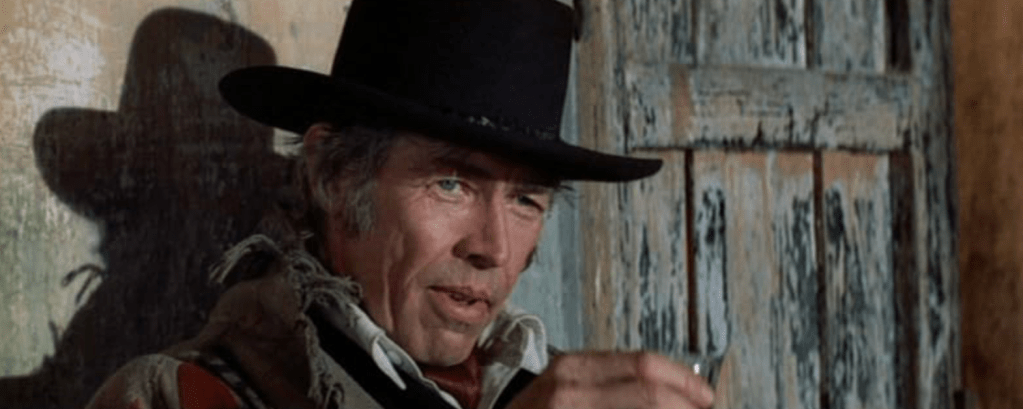
Last night Robin and I watched “Pat Garrett and Billy the Kid,” a Sam Peckinpah film from 1973. It was my fault, because the movie would have been more useful as a cautionary tale for new filmmakers as to what sorts of things to avoid in making movies, and a treatise on the value of editing.
But in spite of containing what I saw as errors of judgment, I enjoyed myself. The cast was amazing, almost unbelievable. Here is a partial list, just to whet your appetite, should you ever have two hours to spend on watching a kind of glorious mess. It’s almost a Who’s Who of western character actors.
James Coburn
Kris Kristofferson
Richard Jaeckel
Jason Robards
Bob Dylan
Rita Coolidge
Chill Wills
Barry Sullivan
R.G. Armstrong
Jack Elam
Paul Fix
L.Q. Jones
Slim Pickens
Charles Martin Smith
Katy Jurado
Harry Dean Stanton
Elisha Cook Jr.
Sam Peckinpah
Bruce Dern
Dub Taylor
BTW, about Bob Dylan. His performance in the film shows how it was proper to give him the Nobel Prize for poetry, and not for acting. He is apparently supposed to be a man of mystery but only succeeds at being a twerpish sort of character. He did write the excellent score, however, which won him a Grammy nomination. And the timeless song Knockin’ On Heaven’s Door was its centerpiece.



















 Little Home In The Valley