
Well, let’s see … in only six months this charlatan has managed to turn a solidly evidence-based public health system into a caricature of itself. Rather than being a guardian, his office has now become a threat to our health and our welfare.

Apparently it has come as a great surprise to some, that turning the Department of Health and Human Services and the Centers for Disease Control and Prevention over to an idiot will produce idiotic results. People are already dying because of what he’s done and we have only begun to reap that grim harvest.
But an impressive array of medical organizations has now lined up against this fool and his tinted master and is calling them out for the quacks that they are. Among them, I am happy to report, is my own American Academy of Pediatrics. Proud of them I am. Proud of anyone who resists, who does not join the sorry ranks of the collaborators.
******
Robin and I are back in Paradise after a brief sojourn in Durango. I was with her for only the last three days of her stay, and it rained each of those days. Actual rain. During the same period not a drop fell on our home at Basecamp. Sheesh.
On one of those drizzly afternoons I found myself staring out the window at the birdbath, and found there was an impressive number of visitors coming and going. In just one hour I saw the following species:
- Robin
- Collared Dove
- White-breasted Nuthatch
- Red-shafted Flicker
- Downy Woodpecker
- Canada Jay
- Steller’s Jay
- Evening Grosbeak (dozens in a flock)
- Ruby-crowned Kinglet
- Lewis’ Woodpecker.
***
The last one on the list was a new bird to me, and I learned that it was named after Meriwether Lewis, who first described it.* The bird exhibits some very interesting and non-woodpeckery behaviors.
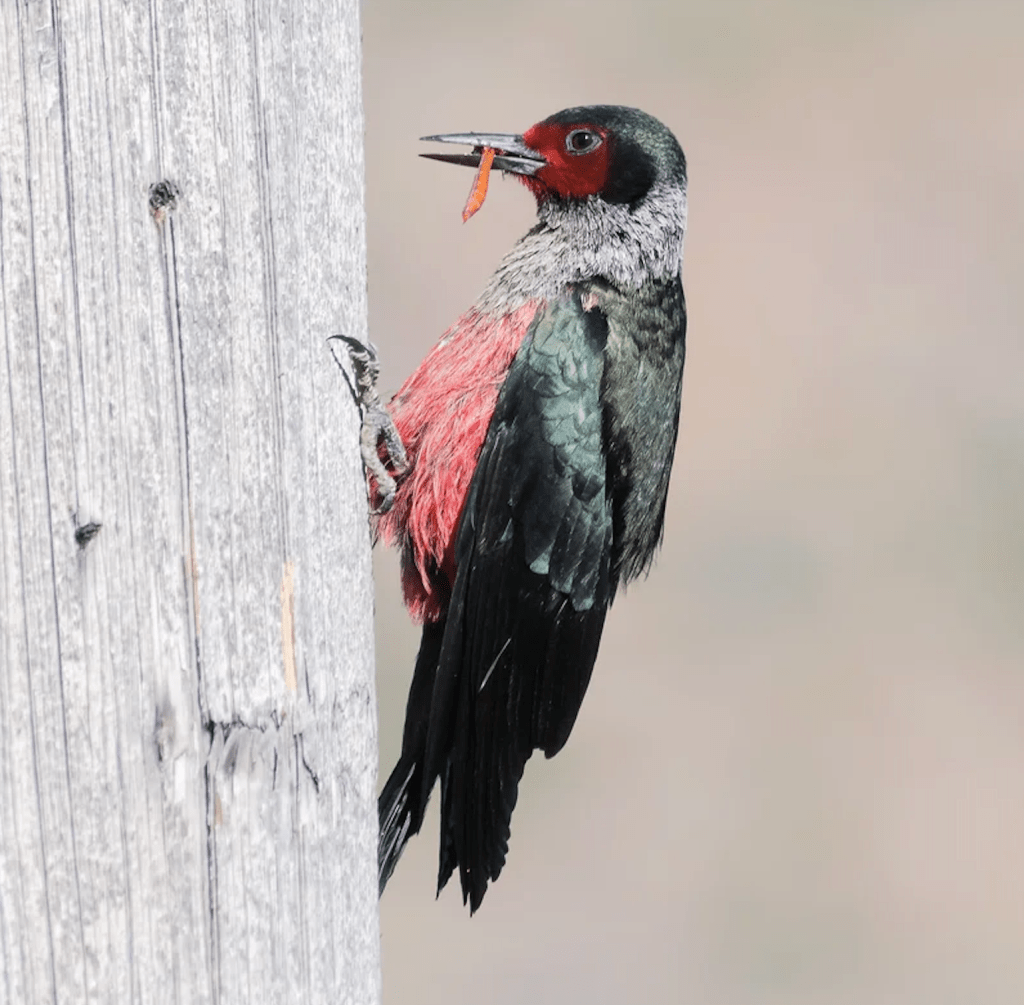
In the summer, Lewis’s Woodpeckers eat mostly insects, catching them in flight by swooping out from a perch like a flycatcher or by foraging in flight like a swallow. Their wide, rounded wings give them a buoyant, straight-line flight, more like a jay or crow than a woodpecker.
The birds seldom excavate for wood-boring insects; unlike other woodpeckers, this species lacks the strong head and neck muscles needed to drill into hard wood.
In the fall, Lewis’s Woodpeckers switch to eating nuts and fruit, chopping up acorns and other nuts and caching them in bark crevices for later consumption. During the winter they aggressively guard these storage areas against intruders, including other woodpecker species.
You may remember the age-old question: How much wood would a woodpecker peck if a woodpecker would peck wood? In the case of Lewis’ Woodpecker, the answer would therefore be precious little.
*Actually, Meriwether Lewis was the first person of European descent to describe it. The indigenous peoples knew about it for quite some time before he arrived on the scene. But the deal is, if you’ve got the ink and the quill, you get to tell the story.
******
******

******
I call myself a Buddhist, even though I strongly suspect that hearing my claim would have brought tears to the eyes of Siddhartha himself. But I digress.
I have learned quite a lot in the past several decades that I might have overlooked without the guidance of a handful of Buddhist teachers. One of those things is the truth of the saying: “When the student is ready, the teacher will appear.” In my shallower days if I gave the saying a thought at all, it was: what a bit of quaint and magical thinking that suddenly there is a teacher where there was not one before.
I learned that was not what was meant at all, but then remember, I was shallow.
The phrase “When the student is ready, the teacher will appear” means that opportunities to learn and gain knowledge become apparent when someone is truly open and receptive to them, whether it’s through a formal teacher, a mentor, life experiences, or even an event. The idea is not that a literal teacher will magically show up, but rather that the necessary guidance, information, or opportunity will present itself once the student has cultivated the necessary mindset, awareness, and readiness for that specific lesson. The saying highlights that learning is an internal process of readiness, not just an external delivery of information.
(The above is an unasked-for paragraph that Google generated without being asked and displayed at the beginning of some search results. AI at work. I was prepared to be incensed when I noticed that it wasn’t such a bad paragraph at all and decided to share it with you.)
To simplify even further, when you truly open your eyes you see that there are teachers all around you. They were always there. You can hardly walk down the street without bumping into half a dozen or more. That windbag droning on at the AA meeting is giving instruction in patience and forbearance to everyone in the room. Valuable lessons that they will use over and over throughout their lives. That is, if they don’t fall into the trap of becoming annoyed and start looking out the window at the blackbirds on the lawn.
I know that I’ve said this before, but there was a point half my life ago when I realized that one of the best teachers I’d ever had was pain. At the time it was emotional pain, one of those dark nights of the soul that went on and on. Since that epiphany I’ve developed a habit of looking for the lesson at times of high stress and discomfort, wondering what it will be this time.
Sometimes the lesson is nothing more than this – I will survive.
******
That intrusive AI paragraph above just reminded me of a theme that runs through any discussion of artificial intelligence I’ve read. The theme that eventually, and sooner rather than later, AI will do us in. The real pessimists say that this doom is unavoidable. If they are correct, it only reinforces my observations that our species will not require aliens to land and vaporize us, we are going to extinguish ourselves.
A sensible species would say: Artificial Intelligence is too dangerous to trifle with, we stand to lose control of it, so let’s just stop studying it. And that would be that. Finito. But we’ve never done that. Alfred Nobel invented gunpowder to ease many of man’s burdens and was dismayed that our major use of his gift to us was to blow each other apart.
Scientists during World War II raced to develop an atomic bomb and were successful, even though many of those same scientists weren’t sure that when we set the first bomb off that the world wouldn’t end at that exact minute.
Space has become so crowded with dead satellites and other man-made debris that going to the moon for a loaf of bread and a bottle of milk is now almost too hazardous an enterprise to consider.
So will we back off from developing this suicide machine, this doomsday device? Even though it is horrifically expensive and uses so much energy to operate that at present we are unable to meet the needs of the beast? Even though not a single person who lives on my street wants it at all? I doubt it. Our track record would indicate otherwise.
******

******
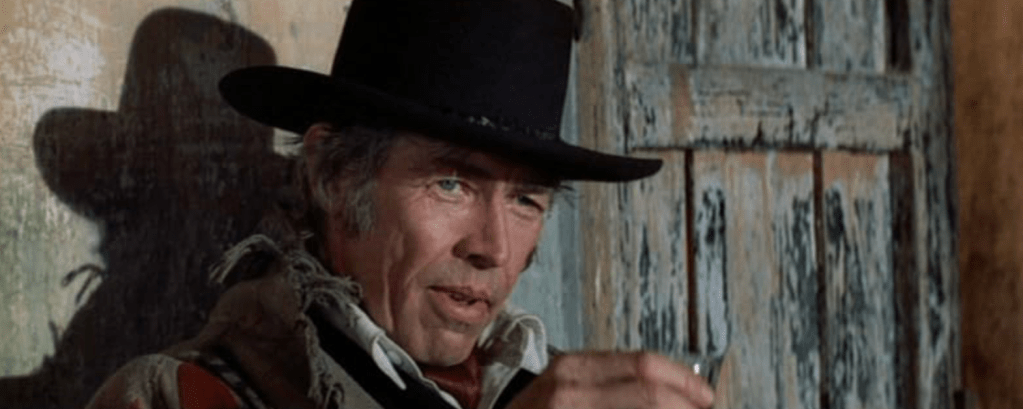
Last night Robin and I watched “Pat Garrett and Billy the Kid,” a Sam Peckinpah film from 1973. It was my fault, because the movie would have been more useful as a cautionary tale for new filmmakers as to what sorts of things to avoid in making movies, and a treatise on the value of editing.

But in spite of containing what I saw as errors of judgment, I enjoyed myself. The cast was amazing, almost unbelievable. Here is a partial list, just to whet your appetite, should you ever have two hours to spend on watching a kind of glorious mess. It’s almost a Who’s Who of western character actors.
- James Coburn
- Kris Kristofferson
- Richard Jaeckel
- Jason Robards
- Bob Dylan
- Rita Coolidge
- Chill Wills
- Barry Sullivan
- R.G. Armstrong
- Jack Elam
- Paul Fix
- L.Q. Jones
- Slim Pickens
- Charles Martin Smith
- Katy Jurado
- Harry Dean Stanton
- Elisha Cook Jr.
- Sam Peckinpah
- Bruce Dern
- Dub Taylor
BTW, about Bob Dylan. His performance in the film shows how it was proper to give him the Nobel Prize for poetry, and not for acting. He is apparently supposed to be a man of mystery but only succeeds at being a twerpish sort of character. He did write the excellent score, however, which won him a Grammy nomination. And the timeless song Knockin’ On Heaven’s Door was its centerpiece.
******
******
 Little Home In The Valley