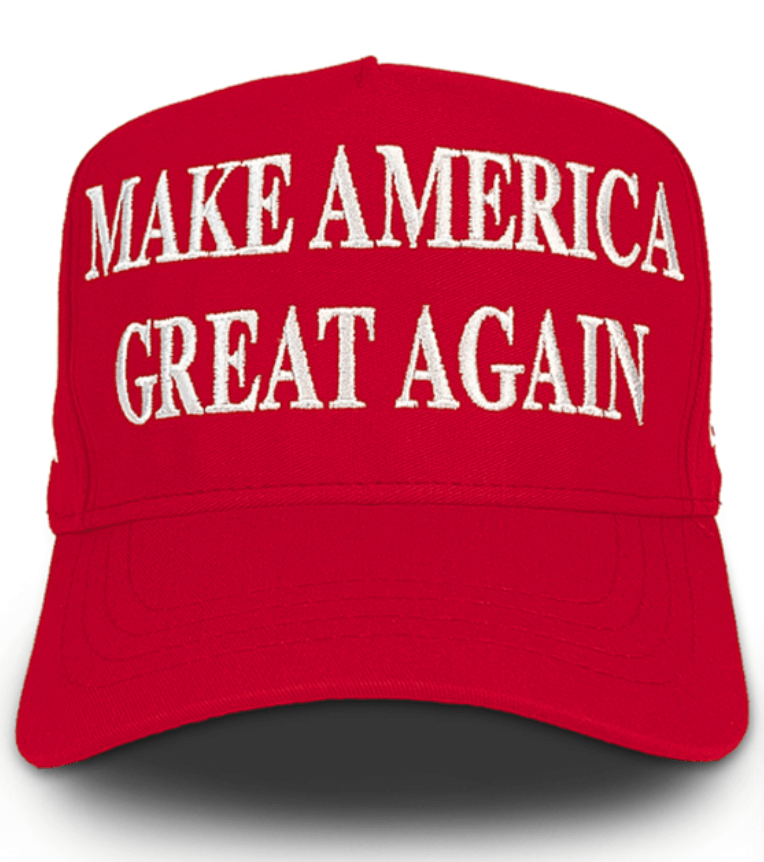
Something I’ve noticed recently out here in Paradise. The nearly complete absence of MAGA caps. For years they were one of the core items of Montrosian male dress. Why, on any trip to the grocery store I would see at least five men wearing them, and interestingly, they were mostly cross-looking senior citizens.
The same thing has happened with the battle flag of the Army of Northern Virginia , the stars and bars. I would guess that a decade ago at least five percent of pickups in town were daily flying these emblems of slavery and treason. While this might seem a small number, keep in mind that pickup trucks are the signature vehicle of our community. Five percent of a bunch is a bunch.
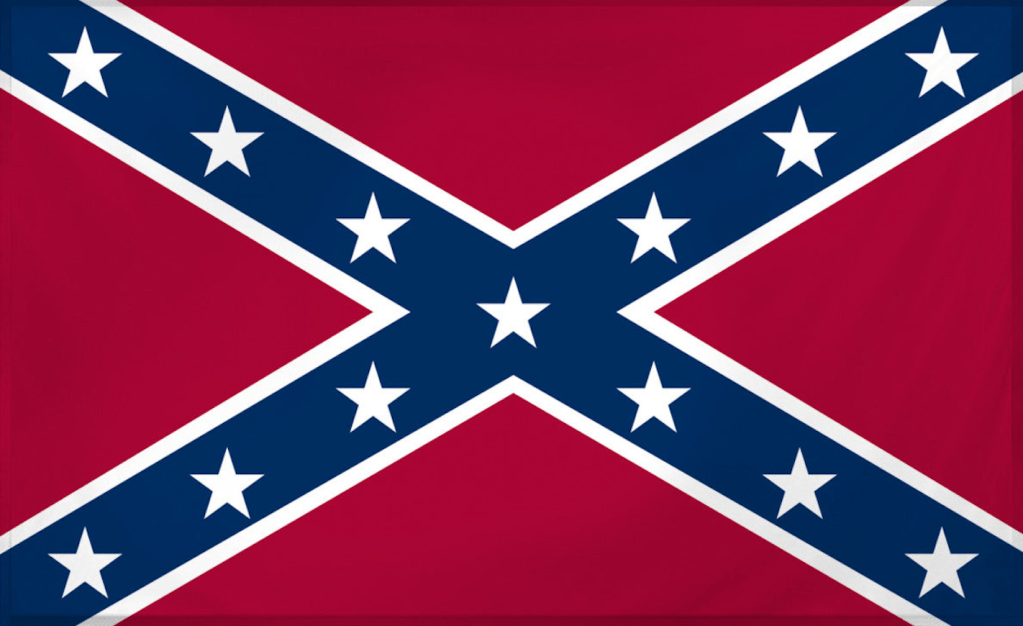
I don’t know the reasons for the decline, I just make observations. Those crabby-looking older dudes might just have died off of advanced constipation. The flag-waving yahoos might have actually taken a closer look at those banners and decided to be offensive in some less complicated manner. Either way, it is getting that much harder to easily identify the dim bulb segment of our community.
******
Lord, this is good. Until today I thought no one would ever touch Emmylou Harris’ rendition of her beautiful song Boulder to Birmingham. Dead wrong is what I was. Here’s Jessie Buckley.
******
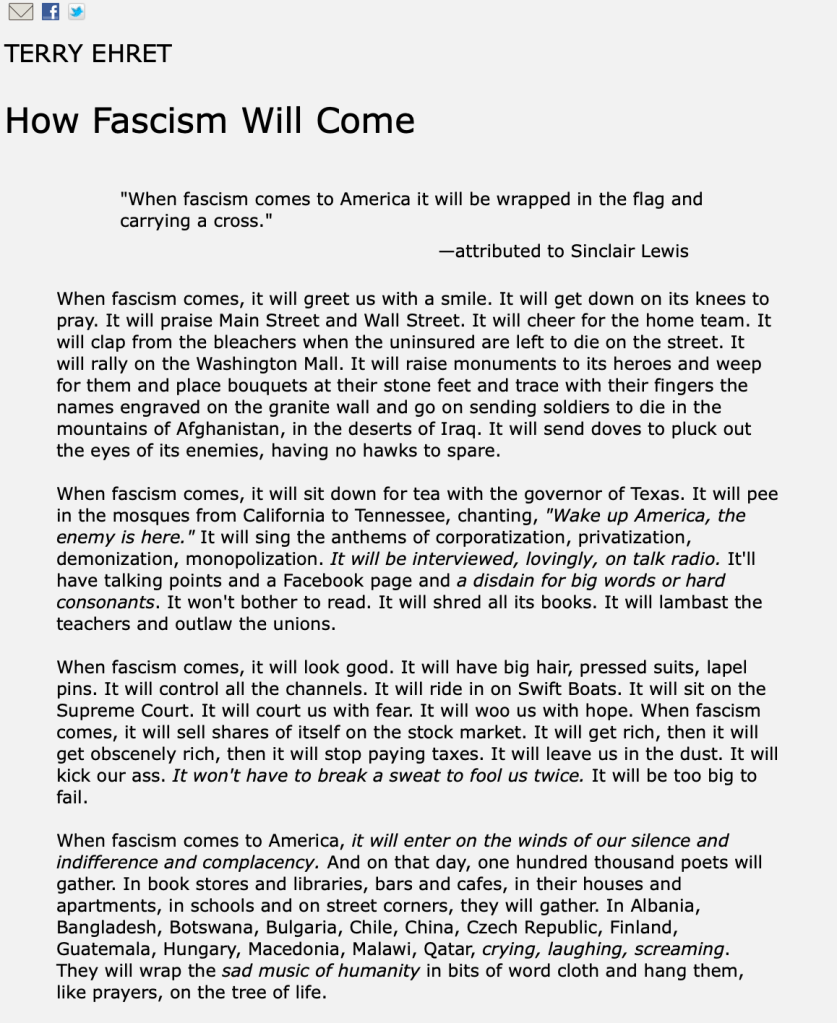
The pickings were sooo good this past few days. Here’s a prescient prose poem from 2011. Honestly, how could we not see this coming? Terry Ehret did and put it down clear as spring water.
******
******
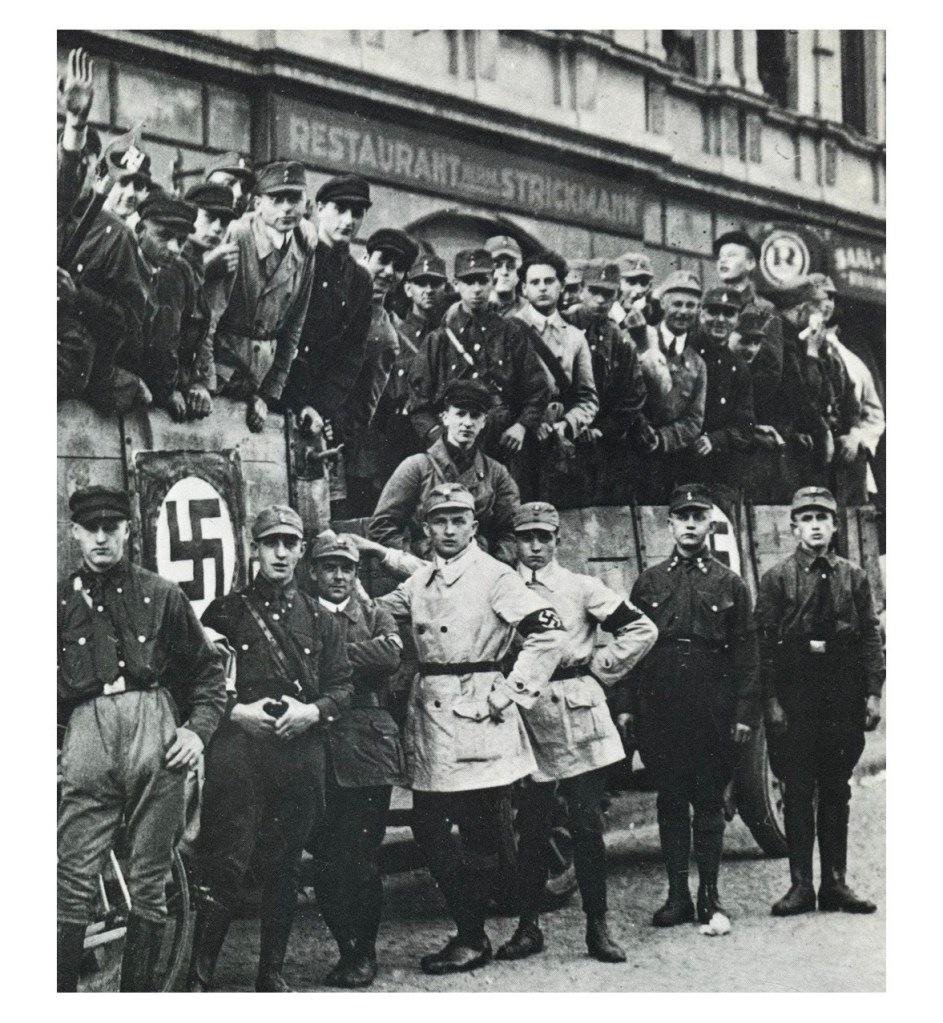
ICE in 1933 (reverse metaphor)
******
Heather Cox Richardson’s postings Letters From An American have been like flashlights, something to find your way with on darker days. On Martin Luther King Jr. day, Monday, she posted this beauty:
You hear sometimes, now that we know the sordid details of the lives of some of our leading figures, that America has no heroes left.
When I was writing a book about the Wounded Knee Massacre, where heroism was pretty thin on the ground, I gave that a lot of thought. And I came to believe that heroism is neither being perfect, nor doing something spectacular. In fact, it’s just the opposite: it’s regular, flawed human beings choosing to put others before themselves, even at great cost, even if no one will ever know, even as they realize the walls might be closing in around them.
It means sitting down the night before D-Day and writing a letter praising the troops and taking all the blame for the next day’s failure upon yourself in case things went wrong, as General Dwight D. Eisenhower did.
It means writing in your diary that you “still believe that people are really good at heart,” even while you are hiding in an attic from the men who are soon going to kill you, as Anne Frank did.
It means signing your name to the bottom of the Declaration of Independence in bold script, even though you know you are signing your own death warrant should the British capture you, as John Hancock did.
It means defending your people’s right to practice a religion you don’t share, even though you know you are becoming a dangerously visible target, as Sitting Bull did.
Sometimes it just means sitting down, even when you are told to stand up, as Rosa Parks did.
None of those people woke up one morning and said to themselves that they were about to do something heroic. It’s just that when they had to, they did what was right.
On April 3, 1968, the night before the Reverend Doctor Martin Luther King Jr. was assassinated by a white supremacist, he gave a speech in support of sanitation workers in Memphis, Tennessee. Since 1966, King had tried to broaden the civil rights movement for racial equality into a larger movement for economic justice. He joined the sanitation workers in Memphis, who were on strike after years of bad pay and such dangerous conditions that two men had been crushed to death in garbage compactors.
After his friend Ralph Abernathy introduced him to the crowd, King had something to say about heroes: “As I listened to Ralph Abernathy and his eloquent and generous introduction and then thought about myself, I wondered who he was talking about.”
Dr. King told the audience that if God had let him choose any era in which to live, he would have chosen the one in which he had landed. “Now, that’s a strange statement to make,” King went on, “because the world is all messed up. The nation is sick. Trouble is in the land; confusion all around…. But I know, somehow, that only when it is dark enough, can you see the stars.” Dr. King said that he felt blessed to live in an era when people had finally woken up and were working together for freedom and economic justice.
He knew he was in danger as he worked for a racially and economically just America. “I don’t know what will happen now. We’ve got some difficult days ahead. But it doesn’t matter…because I’ve been to the mountaintop…. Like anybody, I would like to live a long life…. But I’m not concerned about that now. I just want to do God’s will. And He’s allowed me to go up to the mountain. And I’ve looked over. And I’ve seen the promised land. I may not get there with you. But I want you to know tonight, that we, as a people, will get to the promised land!”
People are wrong to say that we have no heroes left.
Just as they have always been, they are all around us, choosing to do the right thing, no matter what.
Wishing us all a day of peace for Martin Luther King Jr. Day 2026.
******
******
Stepping back and looking closely at this post I realize that the quality of writing is definitely improved. That’s the good news. The bad news is … (sigh) … it’s because I did so little of it.
******
 Little Home In The Valley
Thank you again, Jon! C/ J
LikeLiked by 1 person
De nada
LikeLike