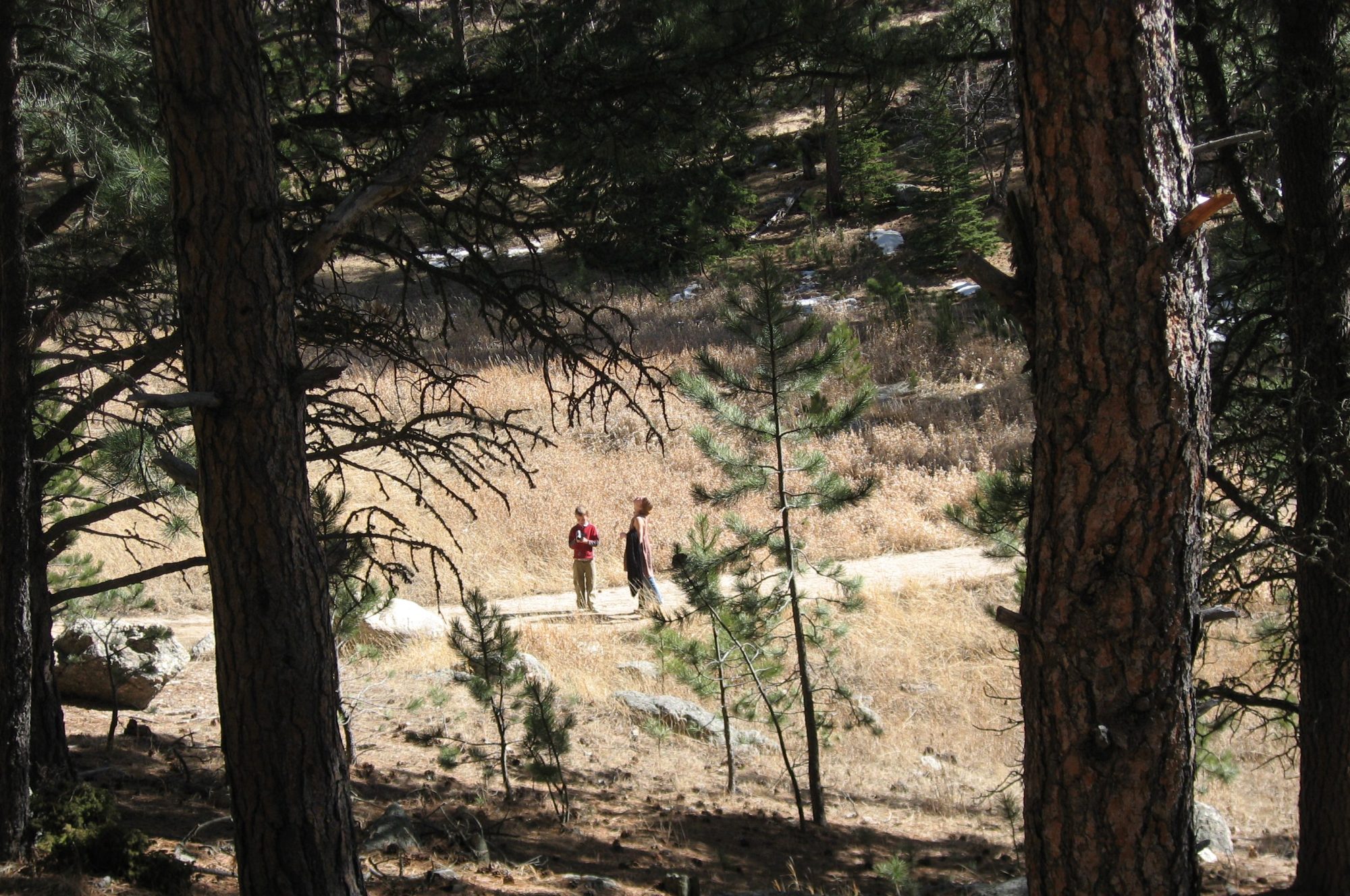
A bit about our family story. Every family has its tales, and this one is about geography. I moved from Michigan to South Dakota with my former wife and four kids. This was in 1980. Within seven years all had fled the state but me. My children ended up in a variety of places, including Minnesota, North Carolina, Missouri, China … but none of them anywhere near where I was living.
After a few years of bachelorhood I married Robin, and took up residence with her and her three children. Robin was 11 years my junior, so her children were still in school in Yankton SD. But within a decade that trio had also packed up and left, this time headed for Colorado.

Robin and I had good friends in South Dakota, so stayed right where we were. Until a new crop of grandchildren started to appear, that is, who were all out there in the Rockies. Eventually those small creatures proved to be very powerful magnets, strong enough to draw us out to the mountains. We triangulated and chose to live between these pockets of kids, who were located in Denver, Steamboat Springs, and Durango. The closest to us was a 2.5 hour drive, the furthest was 6 hours away.
Today those grandchildren live in North Carolina, California, and Texas, with only one still here in the Columbine state. That last survivor is still in high school, so who knows where she might choose to settle once she graduates? It’s a common story of familial mobility, with nobody presently living anywhere near where they grew up, including Robin and I. There is no “old home place” for anyone of us to return to, except for the one we carry with us in our minds. Our blended family empire now stretches from Washington DC to Walnut Grove, California. Making in-person contact with everyone, every year, has not been always been possible, especially as the years pile on.
But I do have some small sense of what those mothers and fathers felt long ago as they watched their children walk up gangplanks onto ships that would take them to the New World, when the possibility of never seeing them again was always present. Those wharfside moments must have been some serious tug on the heart.
******
******

Some new birds showed up on the berm in our front yard this week. I identified them as a pair of lesser goldfinches. Very pretty coloration, although not quite as showy as the variety of goldfinches who came to our feeders in South Dakota. They were picking through the dried heads of the black-eyed Susans for seeds that other birds had missed.
Jabbering clouds of yellow, green, and black Lesser Goldfinches gather in scrubby oak, cottonwood, and willow habitats of the western U.S., or visit suburban yards for seeds and water. These finches primarily eat seeds of plants in the sunflower family, and they occur all the way south to the Peruvian Andes.
(The black eyed Susans we saw them chomping on out front are in the sunflower family, just like the book says they should be.)
******
******
From The New Yorker

******
One of the joys of streaming television is locking on to a program that enriched you in some way, and then being able to revisit it down the road whenever you want to. Taking the same lessons away that you originally did, or finding new ones because you are not the same person you were then.
Robin and I are revisiting Call The Midwife. A series that ran for 13 years. One of those rarities where you could believe in all of the characters as they grew older or grew up. It begins in London, in a neighborhood named Poplar. A part of town that is about as far from posh as you can get.
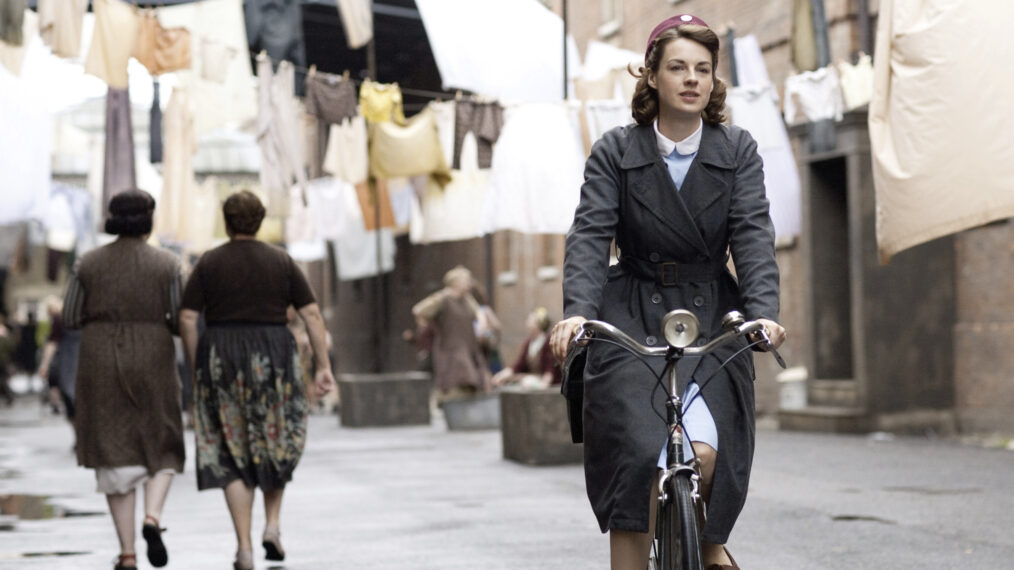
A small group of nuns operate a public health nursing/midwifery service, being assisted by young female nurses who are laity. Many other characters round out an excellent ensemble.
The timing of the series begins in 1957, when the last of the rubble from WWII has barely been cleared away. There are sentimental stories mixed in with large doses of the profound grittiness that is life in Poplar. None of them rings false. Some nights, like last night’s episode about the harms perpetrated by the old London workhouse system, can be a hard watch, actually.
The people who put this series together did their research. Seeing what was available as medical/nursing care in 1957 in a poverty-stricken area and watching this evolve over more than a decade was very engaging for me.
It’s a series where no one is omniscient and mistakes are sometimes made, but the major characters have one thing in common, and that is devotion to helping people. The show has a beating heart.
On Netflix.
******
******
From The New Yorker

******
Oh me, oh my. The company that kept me alive for five years has gone under. Is kaput. Those yellow trucks will no longer be rolling up rural driveways bringing real food to malnourished bachelors. I am, of course, talking about the Schwan’s company.
When my first wife had taken her Le Creuset cookware and moved on to better things, I found myself in a medium large house with a full kitchen but without the will to cook anything. I gave up on meal planning altogether and allowed the package to determine what supper was going to be. One of my favorite dodges was to buy a package of hot dogs and eat that every evening until it was gone. Eight dogs in a package eaten at the rate of two dogs a night meant that four days were covered. I was not fool enough to believe that I was eating healthily, since I knew that one cannot live on fat and pig lips alone, but that reckoning was for some future day and I was hungry right now.
Bread would go moldy, anything in the fridge in Tupperware became a culture medium for some of the most colorful fungi I have ever seen. Works of art, really. I had acquired a microwave oven for the first time, but had not taken the time to learn how to use it properly. It worked well for heating water, but when I would put anything that was meat into it what came out was more suitable for making shoes than for eating.
And then I discovered Schwan’s. An entire yellow truckful of deliciousness would show up in my driveway and all I had to do was to pick out what I wanted and give the man some money.

No waste, no steady streams of hot dogs, no interesting growths in the refrigerator. Instead I could eat chicken cordon bleu and it was pretty darn good for frozen food. Plus I now found something to do with that microwave sitting useless on the counter.
So I experienced a tender moment this morning when I read about the company’s struggles over the past decades, and their painful decision to retire the fleet. If it means anything to them, I am here typing this only because they fed me when I was a man in need.
******
 Little Home In The Valley