
Finished trimming the tree, a fragrant little spruce of nearly perfect symmetry. It’s only six feet high, which suits the room just fine.
After this many years Robin and I no longer have any tree decorations that can break. All of those were swept into the trash long ago and gradually replaced with sturdier ones that are equally pretty. Tree trimming is so much easier now than when my dad would struggle and mutter each Christmas. The only things that are the same are the tree and the stand that it sits in.
Lights: our tiny but very bright light-strings never seem to wear out. Just put them away and take them out again next year. Dad had to deal with larger glass incandescent bulbs where if one burned out the whole string went dark. Which meant laboriously trying a new bulb in each socket until you found the right one. And each year several bulbs would go dead during the season. Which was where much of the aforementioned muttering came in.
Ornaments: nearly all were made of a sort of glass that if you even looked at one sideways it would break into exactly one thousand tiny particles. Each one somehow became invisible until the opportunity arose to stick itself into the foot of a passing barefoot child.
Tinsel: thin shiny icicle-like strips made of … lead foil. Just in case any of us still had a few functioning neurons we could get lead poisoning so we’d fit in with the rest of our family of origin.
[Lead foil was a popular material for tinsel manufacture for several decades of the 20th century. Unlike silver, lead tinsel did not tarnish, so it retained its shine. However, use of lead tinsel was phased out after the 1960s due to concern that it exposed children to a risk of lead poisoning. Wikipedia]

******
From The New Yorker

******
Driving around town one day this week I heard such a heartening story, and it was all about the fact that labor unions have removed themselves from life support and raised their banners once again.
I could not be happier. Ever since the handlers of Ronald Reagan told him to fire all the air traffic controllers back in 1981, large corporations have had things their own way, using the Republican Party as a vise to crush the unions in order to be able to treat their workers as disposable industrial fodder. I am not faulting the corporations here, it is what we should expect them to do when there are no constraints. They are not moral or beneficent entities.

What unions did in the past, and are looking to do again, is to provide balance. To give workers a voice in their compensation, workplace safety, and benefits. Too much to ask?
.
**
If we are going to reverse the race to the bottom, workers must have the right to engage in collective bargaining.
Bernie Sanders
******
Okay, here we go. An experiment. Because of all the fuss this year, I finally found my way to the ChatGPT website, and was met by the interface at right.
Where it says “Message ChatGPT” I wrote history of song Lili Marleen. What it typed out within a few seconds was what you see below in italics. A succinct, accurate, and well written summary of the tune’s history.

***
“Lili Marleen” is a German love song that gained immense popularity during World War II. The song’s history is intertwined with the experiences of soldiers on both sides of the conflict.
The lyrics were written in 1915 by Hans Leip, a German school teacher and poet. Leip wrote the poem as a love letter to his girlfriend Lili, who was waiting for him at home. The poem was published in 1937 in the poetry collection “Die kleine Hafenorgel” (“The Little Harbor Organ”).
In 1938, Norbert Schultze, a German composer, discovered Leip’s poem and decided to set it to music. The song was first recorded by Lale Andersen, a German singer, in 1939. However, it initially received little attention.
The turning point for “Lili Marleen” came when German soldiers stationed in North Africa heard the song on the radio. It struck a chord with them, and they began requesting it frequently. The song’s popularity spread rapidly among German troops, and it became an unofficial anthem for the soldiers on the front lines.
Simultaneously, the British Broadcasting Corporation (BBC) picked up on the song’s popularity among German troops and began broadcasting it as part of their “Soldiers’ Request” program. This ironic turn of events led to the song becoming famous among both Allied and Axis forces.
“Lili Marleen” became a symbol of the universal experience of soldiers longing for their loved ones during wartime. The song’s melancholic melody and poignant lyrics resonated with the emotions of separation and yearning. It transcended national boundaries and became a shared cultural phenomenon.
After the war, the song continued to be popular, and numerous artists recorded their versions in various languages. Lale Andersen, the original singer, continued to perform the song throughout her career. Over the years, “Lili Marleen” has become a classic and is considered one of the most famous and enduring songs associated with World War II.
***
That’s pretty interesting, right? Love the story of how both sides adopted the song, and love the wistful melody as well.
Underneath the lantern,
By the barrack gate
Darling I remember
The way you used to wait
T’was there that you whispered tenderly,
That you loved me,
You’d always be,
My Lilli of the Lamplight,
My own Lilli Marlene
Time would come for roll call,
Time for us to part,
Darling I’d caress you
And press you to my heart,
And there ‘neath that far-off lantern light,
I’d hold you tight ,
We’d kiss good night,
My Lilli of the Lamplight,
My own Lilli Marlene
Orders came for sailing,
Somewhere over there
All confined to barracks
was more than I could bear
I knew you were waiting in the street
I heard your feet,
But could not meet,
My Lilly of the Lamplight,
my own Lilly Marlene
Resting in our billets,
Just behind the lines
Even tho’ we’re parted,
Your lips are close to mine
You wait where that lantern softly gleams,
Your sweet face seems
To haunt my dreams
My Lilly of the Lamplight,
My own Lilly Marlene
******
BTW, if you want to play with ChatGPT, you start at the address https://chat.openai.com. It’s free.
******
******
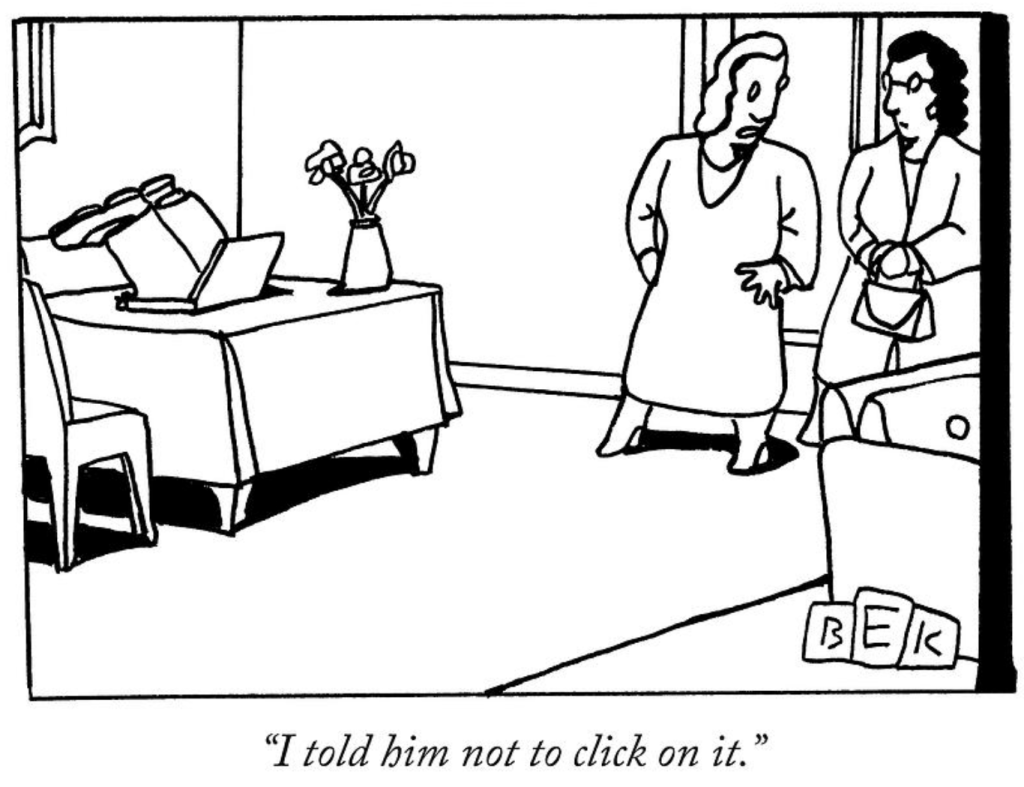
From The New Yorker
******
 Little Home In The Valley
You might try “bard”, the google version of chatgpt. Quite good.
LikeLiked by 1 person
Thanks, Jerry- I will check it out.
LikeLike