I am having my faith shored up in country music this month. That’s not really accurate because I still think that most of that genre is a musical waste of time. I’m talking about the wide swath of undistinguished pabulum that goes something like this: “picked up my baby in her cutoff jeans and we went down the dirt road in my pickup truck to have a beer and make sweet love but oh Lordy does my head feel bad this mornin’ “.
But there’s always been other threads running through those carpet sweepings. Like traditional Appalachian music, spirituals, work songs, and relatively recently “outlaw” and “alternative” country. Singers like Johnny Cash, Kris Kristofferson, and Willie Nelson have been examples. Where the lyrics are typically far from superficial.
This week I’ve spent time listening to a musician who has links to many of those threads of “country” and of rock and roll as well. His name is Jason Isbell and he could be the undeclared love child of Neil Young and Lucinda Williams.
Isbell writes songs that tell good stories, he plays excellent guitar, and he sings well. Interviews he comes across as smart and humble, an attractive combination. Today’s tunes are from a live concert at the Ryman Theater in Nashville, where he and the 400 Unit, his backup band, are in good form. Makes me wish I had been there to hear it.

[BTW – there’s a line that I think we can all get behind in the song “Super 8.” It is “Don’t wanna die in a Super 8 motel.” Can I have an Amen?]
******
We’re seeing more and more articles on eco-relocation. People packing up and moving to parts of the country where the long arm of climate change doesn’t reach. There is no such place, of course, but they seek at least a spot where hurricanes and rising sea levels aren’t daily concerns.
Paradise is one of those less-affected places, at least for today. Oh, these days we are hotter and drier, but at least our homes aren’t being blown skyward or washed out to sea, and for the less adventurous among us having your house stay in one place is important.
******
Living in Colorado has been instructive. Before I became a resident it seemed all rocks and wilderness, and to some degree it still is. But it is harder even just ten years later to get that alone in nature feeling. One of the issues is the mechanization of the mountains.
Colorado’s history of mining left behind a spider web of old, rough roads connecting the small towns and leading to what once were productive mining areas. While ordinary vehicles can’t manage these bumpy and often deeply rutted tracks, Jeeps and other 4WD vehicles can. As soon as the snow melts these pathways are filled with such machines, often traveling in packs.
Some of the pilots of these cars are skilled in navigating mountain roads, but many are not. After all, you don’t need to know what you’re doing to get yourself out there, all you need is a fistful of disposable income and a Jeep. There are now so many unskilled drivers in the alpine areas that a few weeks back a local sheriff was publicly bemoaning the number of “assclowns” on the trails causing problems for drivers who knew what they were doing.
None of these things are impediments to the guy on foot, who can walk past a roadblock caused by a driver who fears going forward and is unable to back up. Hikers don’t get to cover as much ground as the motorized explorer, but they do get to know the ground they cover better. To each their own. I happen to prefer wearing out a pair of boots to a set of tires.
******
******
I don’t know how many of you are as fascinated by the story of the man eating lions of Tsavo as I am, but there was a tidbit on CNN that I thought worth sharing. The taxidermized lions have been on display at the Field Museum in Chicago for 100 years but recently some small hair fragments noted in their teeth drew the attention of researchers and the guns of DNA study were brought to bear.
What they found was that almost anything on four legs was included in their diet plan, including some large mammals not found today in what is usually considered to be the lions’ range.
And of course, some of the hairs were human.

In the photo of the mounted specimens they don’t look nearly as threatening as they must have in 1898, when they killed 35 railway workers who were involved in building a bridge over the Tsavo River in Kenya. This story was made into a pretty entertaining movie entitled “The Ghost and the Darkness.” There is a fair amount of quibbling about the film not telling the story exactly as it happened, but when has that ever occurred before? It still makes for a good story, and one disturbing enough to frighten small children.
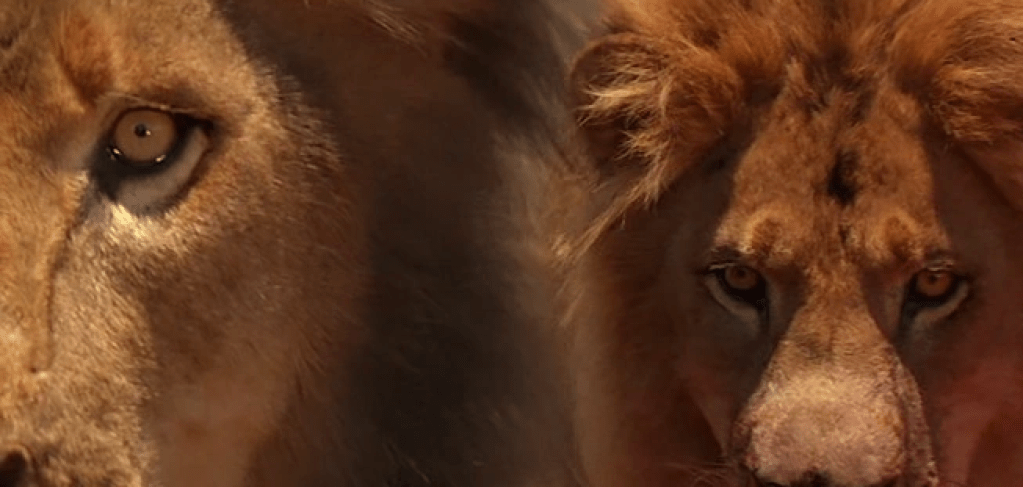
There are suggestions that the lions turned more to dining on softer and easier to catch humans because of dental diseases. Having had many toothaches as a child I can easily imagine how that could occur. Either way, these famous cats are once again in the news.
******
 Little Home In The Valley